
Why does my boiler temperature rise quickly then fall again?
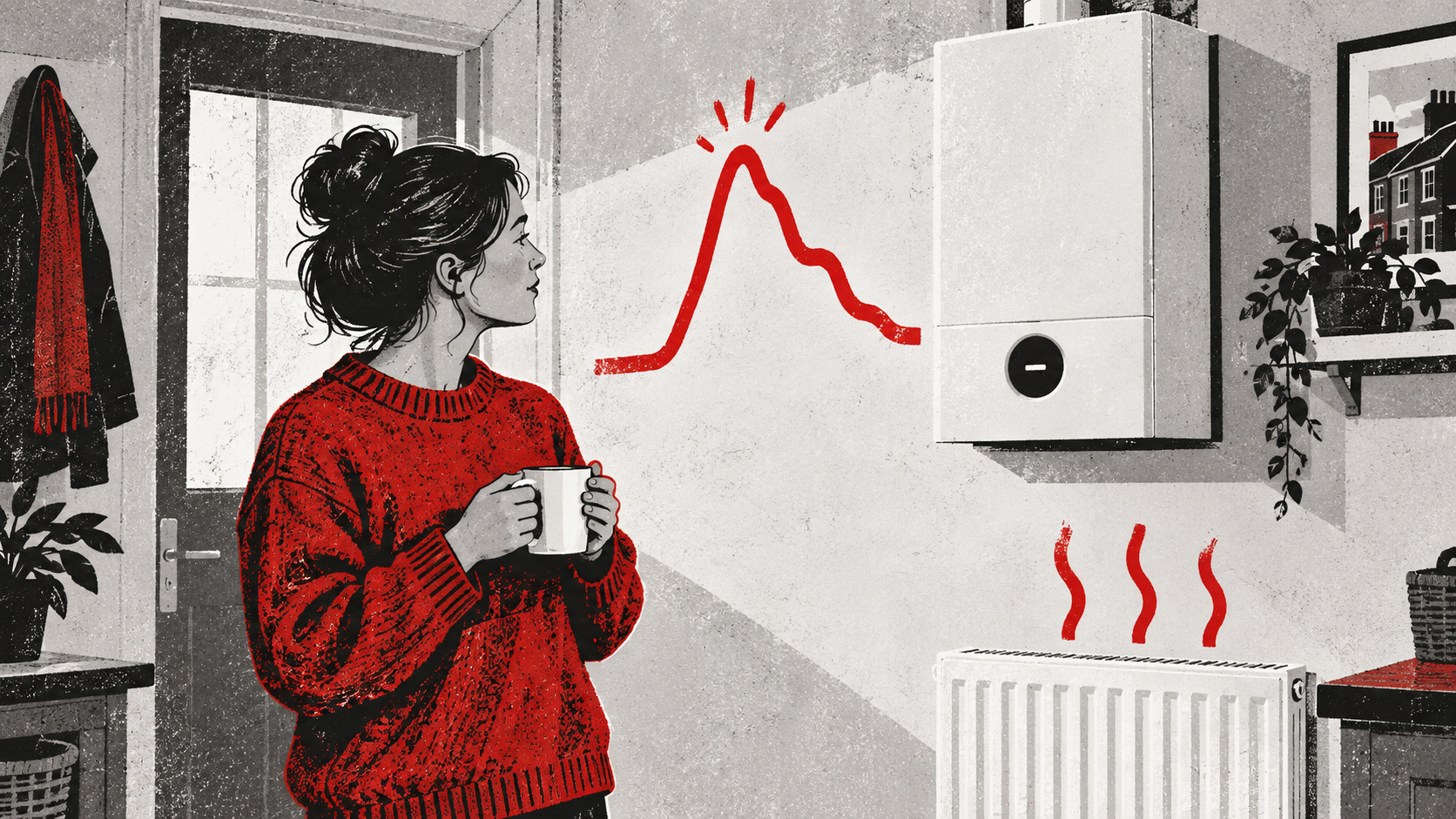
The number on most boiler displays is the temperature of water leaving the boiler, not the room temperature. It normally rises while the burner heats the water and falls as heat moves through the radiators or after the burner pauses. Very fast, repeated rises and falls while rooms stay cold can point to poor circulation or control problems.
Watch the display and normal symbols without opening the boiler. The exact sequence matters more than one temperature reading.
Check what the number represents
Many modern boilers return to showing the current central-heating flow temperature after you finish changing a setting. The temperature you selected is usually a maximum target, not a number the display will hold continuously.
Manufacturer instructions distinguish the current flow temperature from the room thermostat and from the hot-water setting. Use the manual for the exact model before interpreting the display.
A rise during firing is normal
When the room controls ask for heat, the burner warms water inside the boiler. The flow-temperature number should rise as that heated water heads towards the radiators.
A flame or burner symbol normally shows when the burner is alight. Once the target or control demand is satisfied, the burner can turn down or switch off and the number can begin falling.
The boiler does not need to fire continuously
Modern boilers can adjust their heat output, a process called modulation. They can also pause the burner while the pump continues moving water. This prevents the flow temperature simply climbing without limit.
The burner may restart after the circulating water cools. A steady rhythm during a long heating demand can be normal, especially when the home needs less heat than the boiler’s minimum output.
Cold return water can make the display fall
Water releases heat as it passes through radiators and comes back cooler. Energy Saving Trust calls the outgoing water flow temperature and the returning water return temperature.
When cooler system water reaches the boiler, the measured flow temperature can drop before the burner responds. That movement is part of transferring heat into the rooms.
Hot-water use creates a different pattern
On a combi, opening a hot tap changes the boiler’s job. The display may switch mode or show a different operating temperature while it heats tap water, then return to central heating afterwards.
Record whether the rise and fall happens during radiator heating, hot-water use or both. Do not compare the pattern while several taps and heating zones are changing at once.
What a normal cycle looks like
The heating symbol appears, the burner lights, the displayed temperature rises and radiators begin warming. The burner then reduces or stops, while circulation continues and the number falls gradually. Rooms still move towards the thermostat target.
The exact temperatures and timing vary by boiler, controls, system size and weather. Compare the behaviour with the boiler’s own normal pattern rather than a number from another home.
When the rise is unusually fast
If the temperature shoots upwards soon after ignition and the burner stops before radiators warm, the boiler may not be moving heat into the system quickly enough. Manufacturer fault guidance links excessive flow-temperature rise with possible circulation issues.
A fault symbol, gradient-limit message or repeated restart after a short pause is more significant than an ordinary rise towards the selected flow temperature.
Look at the radiators at the same time
If radiators warm evenly while the display cycles, the system may be operating normally. If the boiler gets hot but every radiator pipe remains cool, circulation needs attention.
If nearby radiators become hot while distant ones stay cold, balancing or a restriction may be involved. If one zone is cold, its thermostat or motorised valve may not be opening.
Closed valves can reduce the available flow
Check that the rooms you intend to heat have ordinary radiator valve heads in usable positions. Do not close every radiator valve to see whether the boiler temperature changes.
Systems are designed with a particular water route and may use an automatic bypass. Randomly altering lockshield valves or hidden bypass settings can cause noise and poor circulation.
Air or debris can slow heat movement
A radiator cold across the top can contain trapped air. One warm at the top but cold at the bottom can indicate debris. Both patterns can reduce effective heat transfer, though neither proves why the boiler display is cycling.
Follow safe radiator guidance only for a clear cold-top air symptom. Do not add chemicals or flush the system on the strength of a moving display.
The pump and zone valves need proper testing
A weak or stopped pump, airlock, blocked filter, restricted pipe or motorised valve that has not opened can all let boiler water heat rapidly. These causes overlap and can involve hot water and mains electricity.
Do not remove pump screws, valve covers, filters or the boiler casing. An engineer can compare flow and return temperatures and test circulation safely.
A temperature sensor can also mislead the control
If the displayed number jumps rather than changes smoothly, bears no relation to radiator warmth or is accompanied by a sensor fault code, the temperature sensor or its connection may need checking.
Never assume a named sensor has failed from the display alone. Use the exact code description in the manufacturer’s current literature.
Pressure is a separate measurement
On a sealed system, pressure usually rises somewhat as water heats and falls as it cools. That is different from the temperature number rising and falling during burner operation.
Do not top up the boiler simply because the temperature changes. Only act on pressure when the cold gauge is outside the model’s stated range.
What to record
Note the starting and peak temperature, how quickly it rises, whether the flame symbol goes out, how long before it restarts and what the radiators do. Include the thermostat target and any hot-water use.
A short video of the normal display can help an engineer, provided you do not remove covers or keep forcing repeated cycles.
When to arrange a repair
Arrange a check when the display rises very rapidly and repeatedly, radiators remain cold, the boiler bangs or kettles, a circulation or sensor code appears, or the boiler locks out. Leaks, burning smells or overheating also need prompt attention.
If you smell gas, suspect carbon monoxide or a carbon monoxide alarm sounds, leave the property and follow emergency gas advice.
Common questions
Why does the temperature fall when the flame goes off?
The burner has stopped adding heat while cooler water is still circulating through the boiler. A fall is therefore expected.
Is repeated burner cycling always a fault?
No. The boiler may be matching a small heat demand. Very short cycles with poor room heating, noise or faults deserve investigation.
Should the display equal the thermostat setting?
No. One is normally water temperature and the other is room-air temperature, so they measure different things.
Related guides: Boiler temperature rises after it turns off, Radiators warm up slowly and Normal pressure but cold radiators.
Temperature cycling too quickly?
Have the controls and circulation checked.