
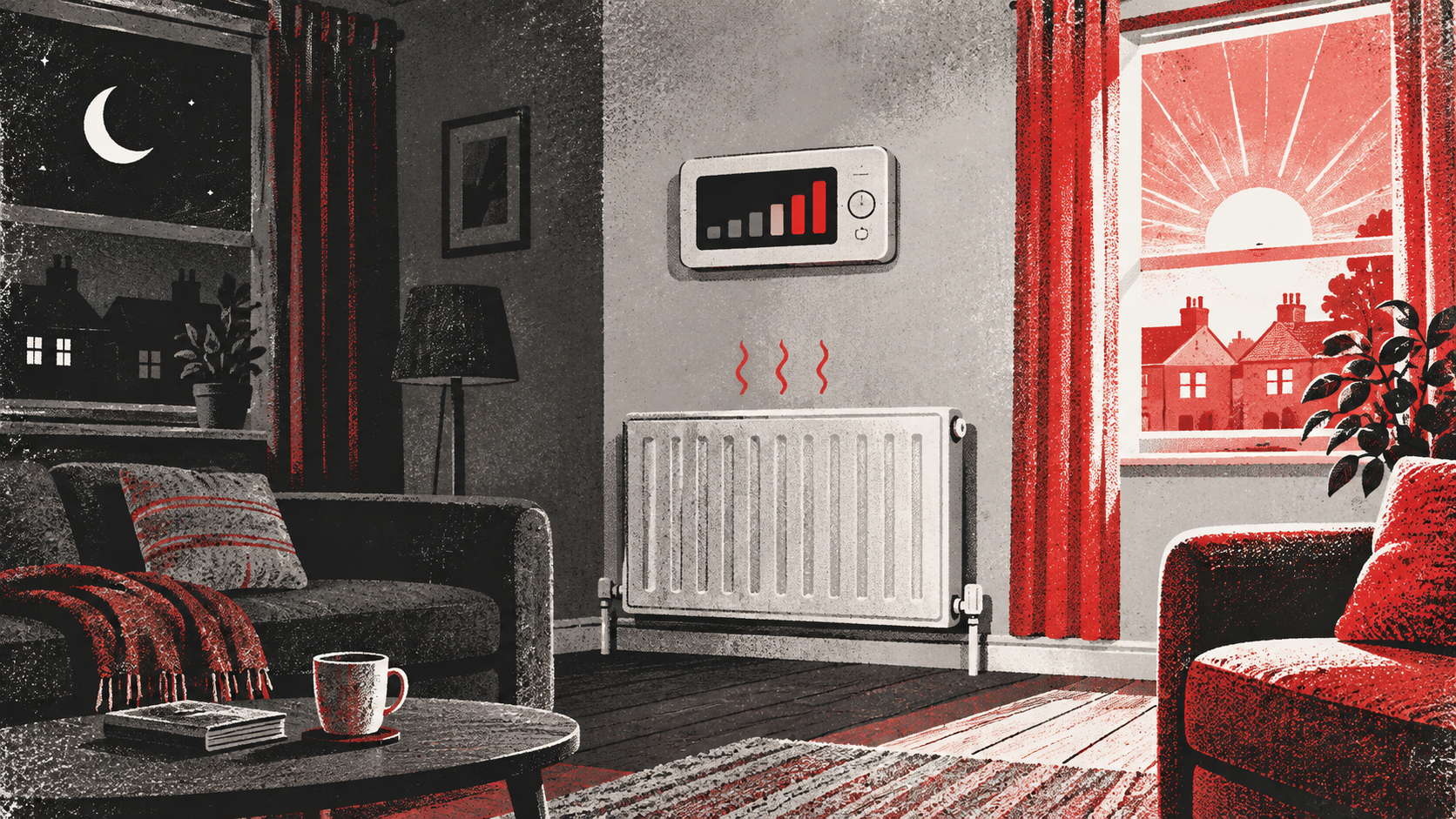
What is heating setback temperature and when should I use it?
A heating setback temperature is a lower room-temperature target used during the night or while the home is unoccupied. Instead of asking for your normal comfort temperature, the control allows the house to cool to a chosen minimum and reheats it before you need the rooms. It can save energy, but the right setting depends on the people, building and heating system.
Setback is a feature of the room control or heating schedule. It is not the same as turning down the boiler’s radiator-water temperature.
A simple example
You might use 20°C while the living room is occupied, then schedule a lower temperature overnight. The heating remains available, but it only runs if the measured room temperature drops below that lower target.
In the morning, the schedule returns to the comfort temperature. Some controls start early automatically; simpler programmers need an earlier start time chosen by the user.
Setback is different from switching off
If a schedule is fully off, the control does not normally call for space heating until the next on period, apart from separate frost-protection functions. With a setback, the system can maintain a minimum room temperature.
This can be useful where the property cools quickly, where occupants need a minimum temperature, or where avoiding a very cold start makes the morning more comfortable.
Setback is not the boiler flow temperature
The room setpoint tells the heating when the home needs warmth. Boiler flow temperature tells the boiler how hot to make the water sent to the radiators.
Energy Saving Trust describes these as separate controls. Changing one does not automatically change the other, although both influence how long the system runs and how quickly rooms recover.
When a setback can make sense
It can suit a home that is occupied every day but does not need full comfort heat overnight. It can also provide a lower background target during a short absence rather than maintaining the daytime setting.
It is most useful when the schedule matches real life. Heating an empty home to the same temperature as an occupied one usually wastes energy.
How low should the setback be?
There is no single temperature for every household. Energy Saving Trust says most people set their main thermostat to the lowest comfortable level, commonly between 18°C and 21°C. A setback is lower than the household’s chosen comfort setting, not a universal fixed number.
Consider age, health, mobility, damp risk, pets and how quickly the building cools. Vulnerable occupants may need warmer rooms and more individual advice.
Start with a modest difference
If your control supports setback, use its manual and begin with a small reduction from the daytime setting. Observe comfort overnight and the time needed to recover in the morning.
A very deep setback can leave a slow-heating home uncomfortable for hours. If you compensate by turning the thermostat much higher, the home will not warm faster; you may only make it overheat later.
Boilers and heat pumps behave differently
A radiator system with a gas boiler may recover reasonably quickly, although the home and radiators still set the pace. Heat pumps normally work with lower water temperatures and can take longer to restore a large temperature drop.
For a heat pump or underfloor heating, follow the installer and manufacturer guidance. A smaller setback or steady temperature may suit the system better than a large overnight reduction.
Underfloor heating is slow to respond
Underfloor heating warms a large floor mass and may need hours to change room temperature. A schedule that works for radiators can therefore feel late with underfloor heating.
If you have mixed emitters, separate zones may need different start times and different setbacks. Do not copy one zone’s schedule blindly to another.
Smart controls may recover automatically
Some smart or weather-compensating controls learn how long the home takes to warm and start early enough to meet the target at the scheduled time. This may be called optimisation, optimum start or adaptive recovery.
Check whether the time in the app means “start heating” or “reach this temperature”. Confusing the two can make the boiler appear to run unexpectedly.
What happens in a well-insulated home?
A well-insulated home may lose little heat overnight, so it might not reach the setback temperature at all. That is not a fault: the heating simply has no need to run.
In a draughty home, the lower target may be reached quickly and maintained for longer. Improving insulation and reducing uncontrolled draughts can change the best schedule.
Setback and condensation
Colder surfaces can increase condensation risk when indoor air is humid. Heating is only one part of the picture: ventilation, moisture production and insulation also matter.
If windows, walls or hidden corners become persistently wet or mouldy, address the moisture problem rather than relying on a higher thermostat alone.
Setback when the home is empty
For a normal working day, a lower target can avoid full heating while protecting comfort for the return. For a longer holiday, use the control’s holiday or away mode if available and follow the appliance instructions.
Do not switch off power to a boiler simply to create a setback. That can disable programmed functions and frost protection.
Check the thermostat location
The setback is only as useful as the temperature measurement. Energy Saving Trust advises keeping a room thermostat in free air and away from curtains, furniture, radiators and other heat sources.
A cold draught or nearby lamp can make the control respond to the wrong conditions. Compare its reading with how the surrounding room actually feels before changing the whole schedule.
How to test a new schedule
Make one change at a time and keep it for several similar days. Note the overnight minimum, morning comfort, start time, outdoor conditions and whether the boiler runs during the setback.
Adjust by one degree or a short time interval rather than repeatedly rewriting the schedule. This makes the effect easier to understand.
When setback is not solving the real problem
If the home cannot reach the daytime target, radiators remain cold, the thermostat loses connection or the boiler shows a code, the issue is not simply the setback choice.
Likewise, a boiler that fires continuously while every room is above both scheduled targets needs its controls checked. Record the schedule, measured temperature and display without opening the appliance.
Common questions
Is setback the same as frost protection?
No. Frost protection is an appliance or control safeguard at a much lower threshold. A household setback is chosen for comfort and building conditions.
Does a setback save money?
Reducing unnecessary room temperature generally reduces heat loss, but exact savings depend on the home, weather, schedule and heating system. Avoid invented percentages.
Should I use setback every night?
Only if it suits the occupants and system. Some homes and heat pumps work better with a small reduction, while others can use a wider overnight change.
Why does the heating start before the scheduled time?
An adaptive control may be starting early so the room reaches target on time. Check the manual for optimum-start or recovery settings.
Related guides: Boiler runs after the thermostat is turned down, Thermostat reads cold while radiators heat and Radiators cool before the room is warm.
Heating schedule not behaving?
Have the controls and boiler response checked.