
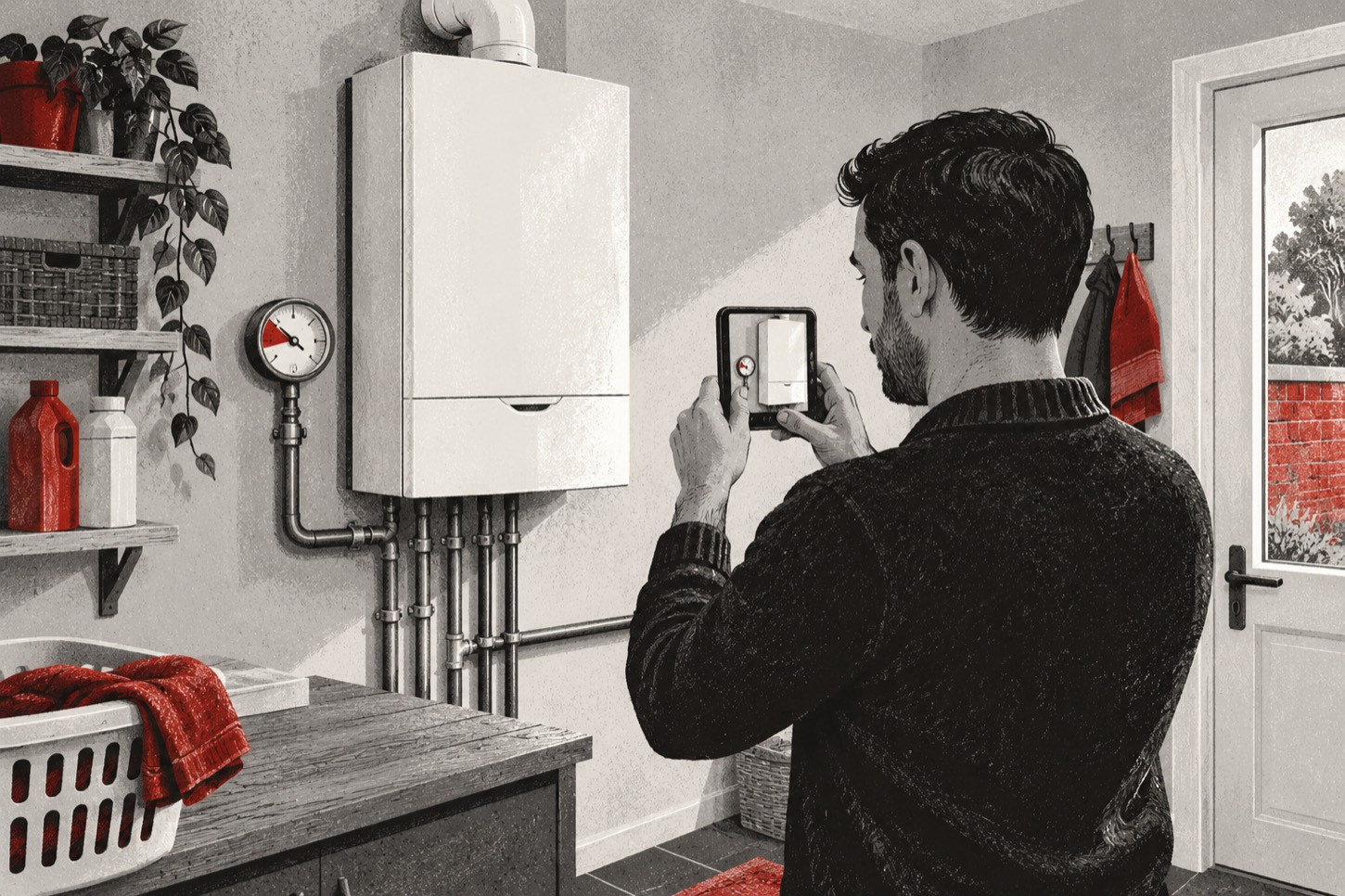
If your Potterton boiler shows E430 or 166, Baxi’s current error-code list describes it as a “Water pressure temporary fault”. The boiler has detected a pressure condition that is temporarily outside what it expects, so heating or hot water may pause while the controls protect the appliance.
This code needs to be read carefully. Baxi lists ordinary E430 / 166 separately from E430 / 166 with a crossed-flame symbol, which it describes as “Water pressure test failed”. Record the full display, including any symbol, because the two entries should not be treated as identical.
What does Potterton E430 or 166 mean?
The water circulating through a sealed heating system must remain within the operating range set out for the boiler. E430 / 166 means the controls have detected a temporary water-pressure problem. The code does not prove why the pressure changed, and it does not identify a particular component.
A brief fluctuation, pressure that is genuinely too low, a filling or sensing issue, or another system condition can only be separated through the display information and appropriate checks. Avoid assuming the boiler simply needs water added every time the code appears.
Which Potterton boilers use this code?
Baxi places E430 / 166 in the appliance group that includes:
- Potterton Assure Combi
- Potterton Assure System
Potterton has produced several boiler families, so guidance for an Assure model should not automatically be applied to an older Potterton appliance. Check the exact model name on the casing or paperwork before using this guidance.
What is the crossed-flame version?
The official table gives two entries:
- E430 / 166: water pressure temporary fault.
- E430 / 166 plus crossed-flame symbol: water pressure test failed.
A photograph is useful because a spoken description can miss the symbol. Do not repeatedly reset the boiler in an attempt to change one version into the other.
What can you check safely?
Keep all checks external:
- Photograph the complete display, including symbols.
- Confirm the exact model and whether it is a combi or system boiler.
- Read the pressure shown on the boiler’s normal gauge or display.
- Note whether the pressure changes between a cold system and heating operation.
- Look for visible water around radiators, exposed pipework and beneath the boiler without removing covers.
- Record whether the code followed radiator bleeding, recent work or a previous pressure loss.
Compare the reading only with the homeowner instructions for your exact model. If those instructions explicitly allow the user to restore pressure, follow them exactly and stop at the stated level. Do not open the boiler or operate an internal filling device. If you are unsure which control the guide refers to, leave it alone.
Why can boiler pressure fall?
Pressure may change after air has been released from radiators, because water has escaped from the system, or because a component is not maintaining pressure correctly. A visible leak is useful evidence, but the absence of visible water does not prove the system is sound.
If pressure repeatedly drops after being restored, the repeated loss needs attention. Continually adding fresh water is not a permanent fix and can make the underlying problem harder to ignore.
Can pressure also rise too far?
Yes. A system that climbs unusually high while heating and falls again when cold may point to a different pressure-control problem. Do not drain water or operate safety devices to manage the gauge. Record the cold and warm readings for the engineer.
What should you not do?
Do not remove the casing, adjust internal valves, disturb the pressure sensor, dismantle the filling arrangement or release water from safety pipework. Do not use tools on a valve that is stiff or unfamiliar.
A fault code is not a parts list. Avoid ordering a sensor, vessel, valve or control board without tests showing that it is responsible.
Will a reset clear E430?
A temporary condition may clear, but a reset does not repair a leak or pressure-control fault. Follow only the reset instructions for the exact model, and do not keep resetting if E430 returns or the pressure reading remains abnormal.
What happens during the repair?
The engineer will confirm the code and symbol, check the actual system pressure and review how it changes. The system, filling arrangement, visible pipework and relevant boiler controls can then be assessed safely.
The repair depends on the evidence. The important point is to establish why the boiler recorded the pressure fault rather than repeatedly clearing the message.
Can I use the boiler?
If it has locked out, do not bypass the safety response. Heating or hot water may be unavailable until the pressure condition is resolved. Use temporary electric heating according to the appliance instructions and keep heaters clear of soft furnishings.
When is urgent help needed?
Turn the boiler off and arrange prompt attention if water is reaching electrical equipment, leaking rapidly, or causing damage. Do not touch wet electrical accessories.
If you smell gas or suspect carbon monoxide, move to fresh air and call the National Gas Emergency Service on 0800 111 999. Seek medical help if anyone feels unwell.
What should I provide when booking?
Send a photo of the display and pressure gauge, the full model name, and any cold and warm pressure readings you safely observed. Mention visible leaks, recent radiator bleeding and whether the pressure has been restored before.
For a different dry-fire warning, see our Potterton E270 fault-code guide.
Get your Potterton boiler working properly again.
Book a fixed-price boiler repair so the E430 pressure problem can be checked properly and the fault fixed.
Potterton E430 FAQs
Are E430 and 166 the same code?
On the applicable models in Baxi’s table, E430 / 166 are paired as a temporary water-pressure fault.
Does E430 always mean low pressure?
No. The official wording is a temporary water-pressure fault. Record the actual gauge reading and any symbol rather than assuming the cause.
Should I keep topping up the boiler?
No. Follow the exact user guide once if appropriate, but repeated pressure loss needs repair rather than continual refilling.
Why does the crossed-flame symbol matter?
Baxi lists E430 / 166 with that symbol separately as a failed water-pressure test, so include it in your photo and booking details.