
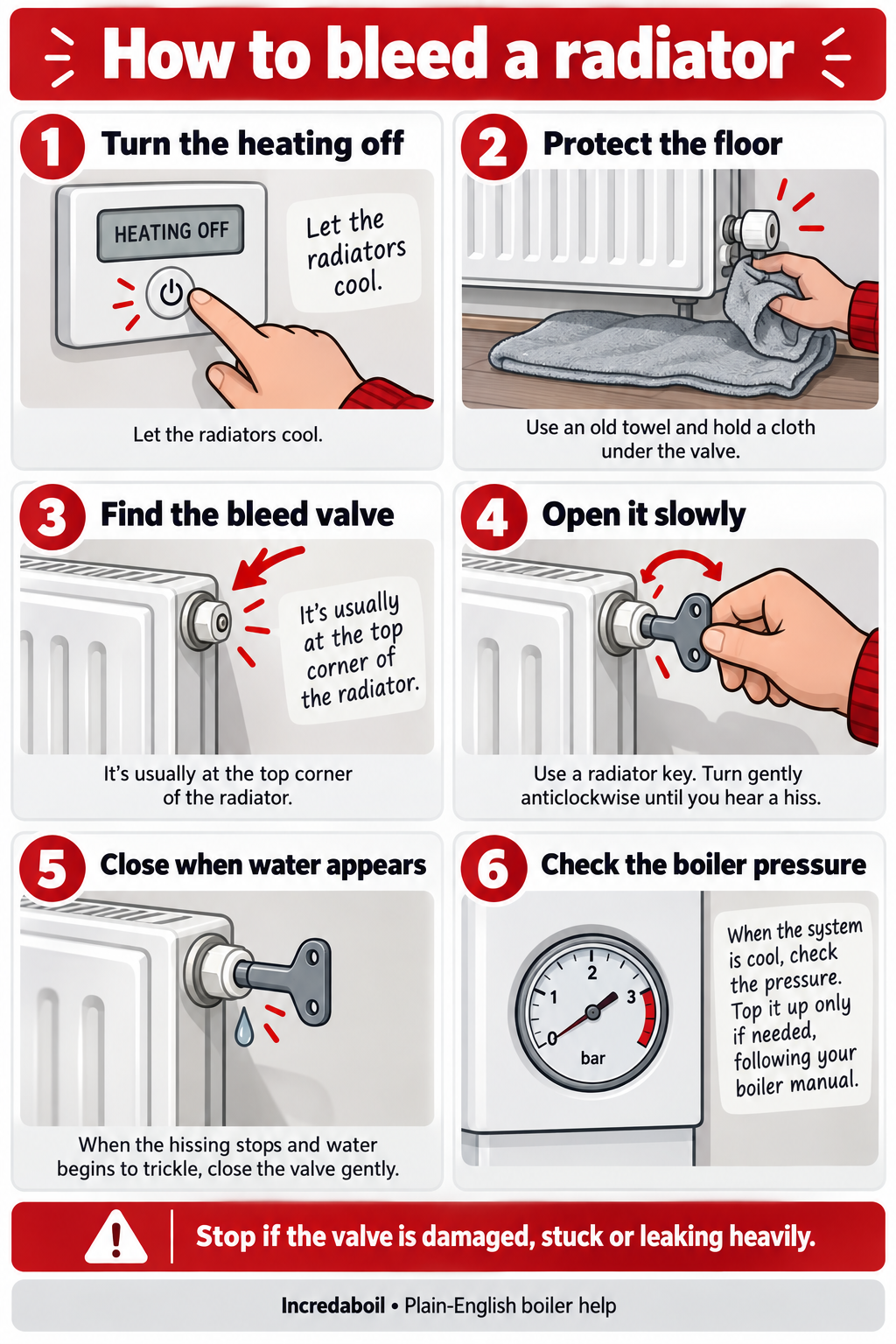
If a radiator is warm at the bottom but cold at the top, trapped air may be stopping hot water from filling it properly. Bleeding releases that air through the small valve at the top. Turn the heating off, let the radiator cool and open the valve only slightly with the correct key.
First check: does it actually need bleeding?
Trapped air usually produces a cold area at the top, sometimes with gurgling. A radiator cold at the bottom is more commonly associated with restricted flow or debris and bleeding may not solve it. One cold radiator can also be caused by closed or stuck valves; several cold radiators can indicate a wider controls, pressure or circulation problem.
Do not keep bleeding a radiator that repeatedly fills with air. Worcester Bosch advises contacting an engineer where excessive bleeding is required or water leaks are present.
What you need
- the correct radiator bleed key, or the tool specified for your valve;
- an old cloth or small towel;
- a shallow container for drips; and
- the boiler user instructions, particularly for checking pressure afterwards.
Pliers can round the valve and a screwdriver is suitable only where the valve is designed for one. A proper key costs little and gives better control.
How to bleed the radiator
- Identify the cold-at-the-top radiator. You may briefly run the heating to compare radiators, taking care around hot surfaces.
- Switch the heating off. Wait until radiators are cool enough to handle. This reduces burn risk and avoids circulating water and air while the valve is open.
- Protect the area. Hold the cloth and container immediately beneath the bleed valve. Heating-system water can be dirty and may mark paint or flooring.
- Fit the key. Place it squarely on the bleed screw at the top corner of the radiator.
- Open very slowly. Turn anticlockwise by a small amount. Do not remove the screw. A hiss usually indicates escaping air.
- Close when water appears. Once the hissing stops and a steady trickle of water begins, turn clockwise until the valve is closed. It needs to seal, not to be forced brutally tight.
- Wipe and check. Dry the valve and look for continuing seepage.
- Repeat only where needed. Bleed other radiators showing the same cold-at-the-top symptom.
- Check boiler pressure. Bleeding releases a little system water and can lower pressure on a sealed system. Follow the boiler’s own user instructions if topping up is required.
- Run the heating again. Check that the radiator warms evenly and that the bleed valve stays dry.
How far should the key turn?
Usually only a fraction of a turn is needed. The aim is to create a controlled path for air, not remove the valve. If nothing happens, stop rather than applying excessive force. A seized, painted-over or damaged valve is a job for someone with the right tools.
What should boiler pressure be afterwards?
There is no single number for every boiler. Many sealed systems operate around 1 to 1.5 bar when cool, but use the range shown in your own manual or display. Baxi’s homeowner guidance says to check pressure after bleeding; Worcester Bosch makes the same point.
If pressure is low and the manual gives a clear homeowner filling procedure, follow it exactly. Filling arrangements differ. If you do not recognise the controls, cannot find the instructions or pressure repeatedly falls, stop and arrange help. Repeated topping-up can mask a leak or appliance fault.
What if water comes out immediately?
If there is no hiss and water appears straight away, that radiator may contain little trapped air. Close the valve. Its cold area probably has another cause.
What if the valve will not close or leaks?
Keep the heating off, contain the water and avoid forcing a damaged fitting. A persistent leak needs repair. Water close to electrical equipment requires particular care; isolate power only if it is safe to do so and seek prompt professional help.
Why does air keep returning?
Occasional air can collect over time, particularly after system work. Frequent recurrence can point to leakage, pressure problems, corrosion or a system design issue. Bleeding treats the symptom, not necessarily the reason it returned.
Cold at the bottom after bleeding
Air rises, so bleeding is aimed at a cold top. A cold bottom can be associated with sludge or poor flow. Do not pour chemicals into the system or attempt aggressive flushing based only on a cold patch. An engineer can compare radiator temperatures, valves and wider system performance before recommending cleaning.
Safety boundaries
Bleeding a conventional radiator is a normal user task. It does not require removing the boiler casing or touching gas components. Stop if the radiator or valve is badly corroded, the fitting moves in the radiator, water sprays uncontrollably, the system is very hot or you are unsure which valve to use.
If you suffer a scald, NHS advice is to cool it under cool or lukewarm running water for 20 minutes and seek appropriate medical assistance. Prevention is easier: heating off, radiator cool, valve opened slowly.
How often should radiators be bled?
Do it when symptoms suggest trapped air, not automatically every week. Checking before the heating season can be useful, but a sealed healthy system should not need constant attention.
The simple version
Cold at the top: air is plausible. Heating off, radiator cool, key in squarely, open slowly, close when water runs, then check boiler pressure. Cold at the bottom, repeated air or recurring pressure loss needs a different investigation.
Frequently asked radiator questions
Should I start upstairs or downstairs?
There is no universal order required for an ordinary single-radiator problem. Identify which radiators are cold at the top and deal with them systematically while the system is off and cool. On a larger property, making a simple list prevents missing one.
How much water should come out?
You are waiting for the air hiss to stop and a controlled, steady appearance of water. Close the valve at that point. There is no benefit in draining cupfuls of system water through the bleed point.
Why is the water dark?
Heating-system water can be discoloured by corrosion products. A small dark drip does not by itself diagnose the system, but persistent cold areas, noisy operation or dirty water may justify an assessment of system condition.
Can I bleed a radiator while the heating is running?
Manufacturer guidance used for this article says to switch the heating off and let radiators cool. That reduces the risk from hot water and gives trapped air a chance to settle at the top.
What if the bleed key snaps or the valve rounds off?
Stop. Improvising with more force can turn a minor heating issue into an uncontrolled leak. A plumber or heating engineer can replace a damaged bleed valve safely.
Do towel rails bleed in the same way?
Many have a bleed point at the top, but designs vary and finishes can be easily damaged. Use the manufacturer’s instructions and the correct tool. Do not assume a decorative cap is the valve.
Why did boiler pressure fall?
On a sealed system, releasing air and a little water can reduce the pressure shown by the boiler. Check it only when the system is in the condition stated by the boiler manual, normally cool. Use only the model-specific filling method provided for householders.
Should I add inhibitor afterwards?
Bleeding an occasional radiator does not normally mean pouring chemicals into the system. Correct testing, dosing and compatibility matter. If significant water has been lost or system work has taken place, ask a competent engineer about water treatment.
Can bleeding fix every cold radiator?
No. Closed valves, stuck thermostatic pins, sludge, poor balancing, pump or control faults and system pressure can all affect heat. The position of the cold patch is useful evidence, not a complete diagnosis.
When to stop and call someone
Arrange help if several radiators repeatedly fill with air, boiler pressure repeatedly falls, the valve leaks after closing, the radiator is heavily corroded or the cold area does not improve. Those patterns deserve diagnosis rather than an endless cycle of key, cloth and optimism.