
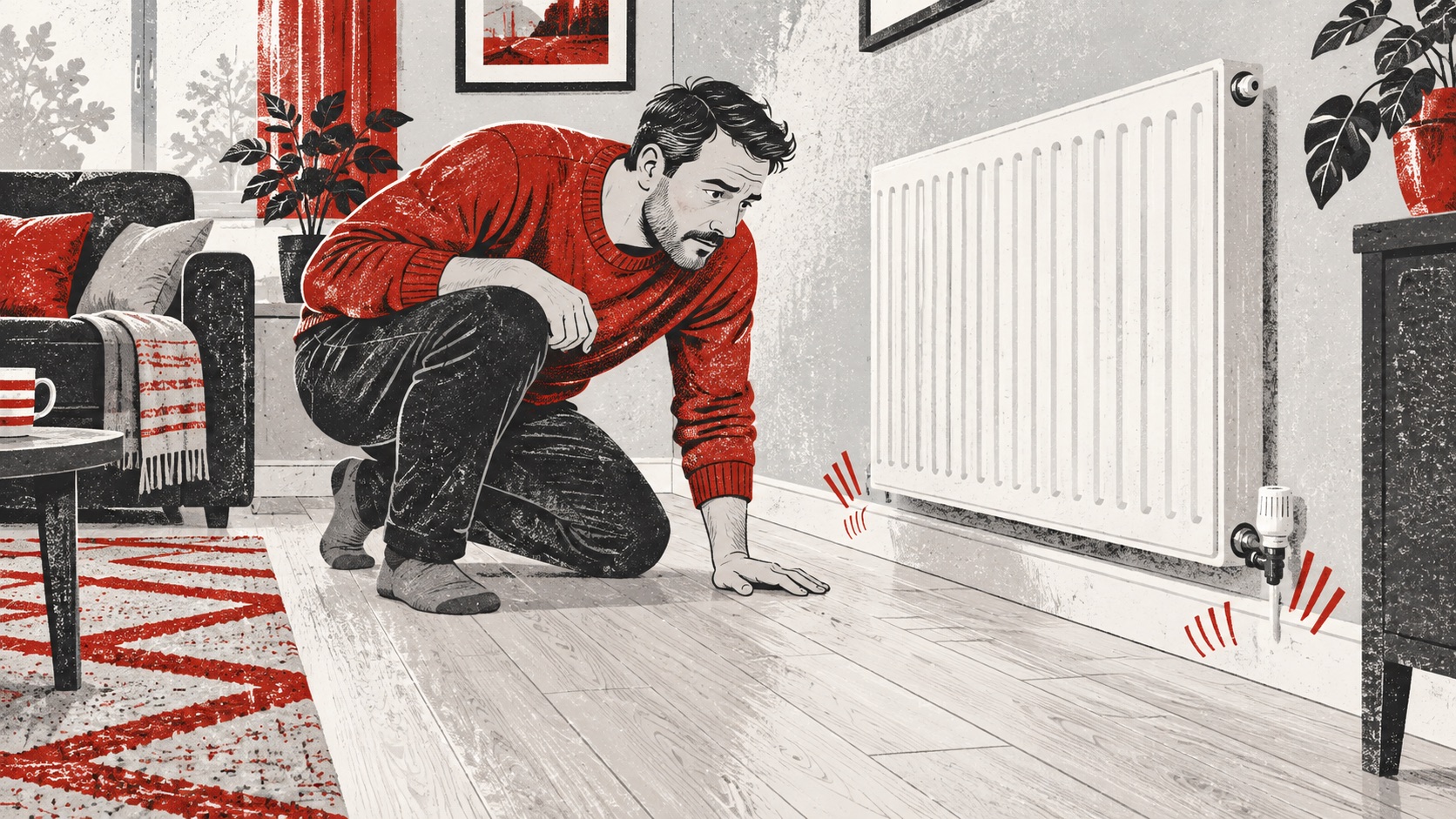
Can new flooring change heating noises?
Yes. New flooring can change the way normal heating-pipe movement is heard, even when the boiler and radiators have not changed. It may press against a pipe, reduce the clearance around it or transmit a quiet tick through a larger, harder surface.
A noise that began immediately after flooring work is worth tracing carefully. Light clicks as pipes warm and cool are different from flowing-water sounds, banging, a leak or a noise coming from inside the boiler.
The short answer
Heating pipes expand slightly as hot water reaches them and contract as they cool. Installation guidance allows space for that movement because restricting it can create noise or damage.
New boards, underlay, trims, fixings or a tighter opening around a pipe can change where movement occurs and how loudly it reaches the room. Do not lift the floor or drill near hidden services to investigate. Record the timing and ask the flooring installer or a competent heating professional to assess it.
Why heating pipes click or creak
Metal and plastic pipework changes dimension as its temperature changes. A pipe that can slide gently through a support may move almost silently. If it rubs against timber, plasterboard, a clip, a floor edge or another hard surface, the movement can build and release as a click, tick or creak.
NHBC guidance says pipes should be adequately supported while still having room for thermal expansion and contraction, specifically to avoid damage and noise. This is an installation issue rather than evidence that the water is boiling or that the boiler is unsafe.
The new floor may amplify an existing sound
A floor acts as part of the room’s structure. Replacing carpet and soft underlay with laminate, engineered timber or another hard finish can make a small vibration easier to hear. A sound that was present before may suddenly seem sharper or travel farther.
The noise may not be directly beneath the place where it sounds loudest. Structure-borne sound can travel through boards, joists, skirting and pipe supports before reaching the room.
That is why listening location alone cannot prove which pipe is involved. The timing in the heating cycle is often better evidence.
Clearance around pipes matters
Floating floors need space to expand and contract as room temperature and humidity change. Quick-Step’s installation guidance, for example, specifies expansion clearance around room edges and pipes and warns that restricting natural movement can contribute to open joints or squeaking.
A newly fitted board, trim or seal that touches a heating pipe can also pass pipe movement into the floor. The visible contact point may be simple, but concealed pipes, cables and joists make cutting or altering the area a job for someone who understands the installation.
Do not push objects into the gap, add lubricant, drive in a screw or enlarge an opening yourself. A hidden service can be closer than it appears.
Match the noise to the heating cycle
- Ticks begin as a radiator warms: pipe or radiator expansion is plausible.
- Ticks fade after the heating stops: cooling metal or pipe contraction may explain them.
- A creak happens when somebody walks past: the floor or its support may be moving independently of the heating.
- A knock happens when a valve changes: water flow, a valve or pipe restraint may need assessment.
- A constant rushing or dripping sound remains with the heating off: check for a plumbing or leak issue rather than assuming ordinary expansion.
Our guide to a radiator ticking as it cools explains the related pattern after a heating cycle ends.
A safe listening check
- Start with the heating and floor cool.
- Use the heating normally and note when the first sound begins.
- Record whether it follows one radiator, one wall or a route across the floor.
- Note whether the sound changes when the radiator valve is left in its normal setting.
- Listen again as the system cools, without removing covers or lifting flooring.
- Write down whether boiler pressure, radiator warmth and hot water remain normal.
A short phone recording can help an installer hear the rhythm. Avoid repeatedly heating and cooling the system just to reproduce the noise.
Could it be the flooring itself?
Laminate and timber-based floors also move with changes in temperature and humidity. New flooring can settle, and a floating surface may creak if it is restrained or the subfloor is uneven.
If the noise happens when people walk across the room but not when the heating warms, the flooring installer is the better first contact. If it follows pipe temperature regardless of footsteps, a heating or plumbing assessment is more useful. Sometimes both forms of movement interact.
Check for signs of a leak
Ordinary expansion clicking does not make the boiler lose pressure or create damp. WaterSafe lists damp patches, staining, mould, unusual water use and a constant sound of running water among signs that can point to a hidden leak.
Arrange prompt help if the new noise comes with a falling boiler-pressure reading, damp flooring, swelling boards, staining, a musty smell or water near electrical fittings. Do not lift a wet floor if doing so could expose wiring or hot pipework.
When should the installer return?
Contact the flooring installer if the sound started with the work, visible pipe openings appear tight, the floor creaks underfoot or boards are lifting or separating. Give them the heating-cycle recording so they can distinguish heat-related movement from ordinary floor movement.
Contact a competent heating engineer if the noise is accompanied by poor circulation, cold radiators, repeated pressure loss, banging, a boiler fault code or a sound from inside the appliance. Work on the gas boiler itself must be carried out by an appropriately Gas Safe registered engineer.
The practical conclusion
New flooring can make normal heating expansion more noticeable or restrict movement around a pipe. Match the noise to warming, cooling and footsteps, then record any pressure or damp changes. The timing will help the flooring installer or heating engineer inspect the right area without unnecessary floor removal.