
How does underfloor heating work?
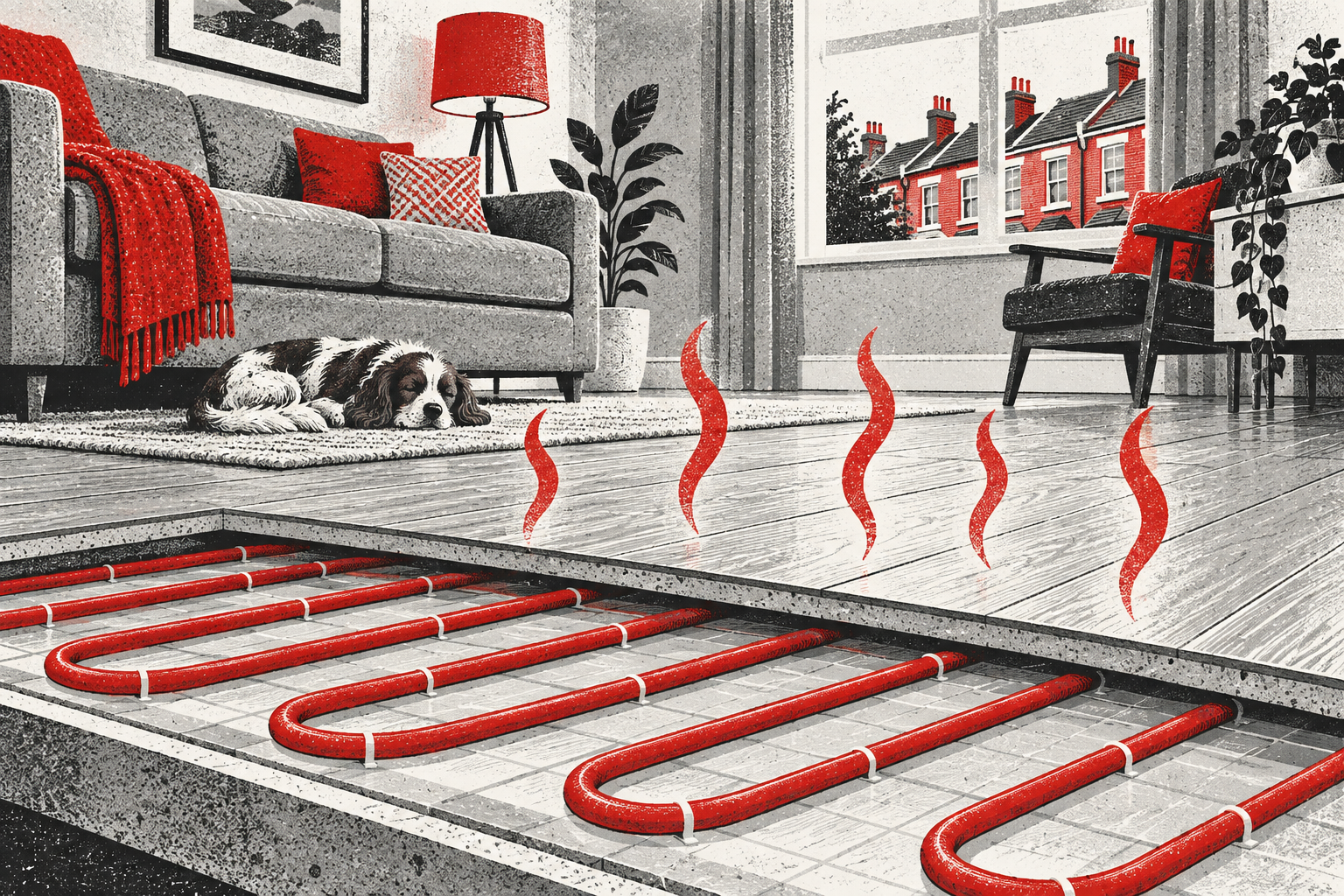
Underfloor heating turns a large area of floor into a gentle heat emitter. A wet system circulates warm water through pipes below the surface; an electric system warms cables or mats. Both heat the floor, which then releases heat into the room.
Because the heated area is much larger than a radiator, a wet system can often work with cooler water. The trade-off is speed: the floor and the material around it take time to warm and cool, so underfloor heating usually responds more slowly than radiators.
Wet and electric systems are different
Wet underfloor heating uses loops of plastic pipe connected to a boiler, heat pump or another suitable heat source. A pump moves water through the loops. A manifold—normally a cabinet containing the connections, valves and flow indicators—distributes water to each room or zone.
Electric underfloor heating uses resistance cables or mats connected to the electrical supply. It does not use boiler water. It can be convenient for a small bathroom or renovation, but Energy Saving Trust says direct electric systems are generally more expensive to run over long periods or across larger areas.
How a wet system warms the room
When a room thermostat calls for heat, its zone control opens and the underfloor pump moves warm water through the relevant loops. Heat passes through the pipe, screed or floor panel, floor finish and then into the room.
The floor does not have to feel hot. A correctly designed system spreads a moderate surface temperature over a wide area. It transfers heat by radiation and by warming the air near the floor, helping create an even room temperature.
The water returning from the floor is cooler and goes back towards the heat source. In a boiler system, a mixing arrangement may reduce the temperature supplied to the underfloor loops because they commonly need cooler water than conventional radiators. Those settings are part of the system design and should not be altered experimentally.
Why underfloor heating can use lower flow temperatures
A small hot radiator must release enough heat from a limited surface. A heated floor has far more surface area, so it can release the room’s required heat while using cooler water. Lower flow temperatures can help a condensing boiler or heat pump operate efficiently when the whole system is properly designed.
That does not mean every underfloor system is automatically cheap to run. Insulation, heat loss, controls, electricity or fuel price, floor covering and the chosen temperature all matter. A badly insulated room may still need more heat than its floor can deliver.
What the manifold does
The manifold sends water to separate pipe loops and collects the returning water. Actuators—small electrically operated heads—can open or close individual zones when their thermostats request heat. Flow meters help an installer balance how much water each loop receives.
Homeowners can safely observe whether a thermostat is calling and whether a visible flow indicator changes, but should not dismantle actuators, force valves or alter balancing settings. A problem at the manifold can look like a boiler fault even when other heating still works.
How the controls work
Underfloor heating is often divided into zones, sometimes one per room. Each thermostat controls the zone it represents rather than setting the boiler temperature directly. A wiring centre coordinates the thermostats, actuators, pump and heat source.
Schedules usually need to account for the system’s slow response. Turning the thermostat much higher will not make the floor heat faster; it only asks the system to keep heating towards a higher room temperature. A modest setback can be more practical than allowing a heavy screed floor to become completely cold.
Why floor construction matters
Pipes may sit in a screed, within grooved panels or beneath suspended timber floors. A thick screed stores more heat and can take longer to respond. Lightweight systems usually react faster but still depend on insulation and good contact between the heating layer and floor finish.
Insulation below the system helps direct heat into the room instead of the ground or void. The heating output must be calculated against the building’s heat loss. NHBC guidance warns that an undersized system cannot simply be rescued by raising temperatures beyond its design.
Which floor coverings work?
Stone and ceramic tiles transfer heat well. Suitable vinyl, laminate and engineered wood can also work, subject to the flooring and heating manufacturers’ temperature and installation limits. Carpet and underlay add resistance, so their combined rating must be suitable for the design.
Large rugs, thick underlay or tightly enclosed furniture can slow heat transfer and create warmer patches. Do not assume a cool-feeling wood or carpet surface means the system is off; measure room temperature and observe it over a full heating period.
Why is it slow to warm up?
The system first has to warm the floor structure. A cold screed can absorb considerable heat before the room temperature changes. Weather, floor finish, starting temperature and water temperature affect the time taken.
If every zone is slow from the first day, the schedule or design may need review. If one previously reliable room becomes cold, check its thermostat and schedule, then report the zone, manifold response and any displayed fault. Do not turn every manifold control at random.
Can it work with radiators?
Yes. Many homes have underfloor heating downstairs and radiators upstairs. The two emitter types may need different water temperatures, flow rates and schedules. Controls and hydraulic design must allow each part to receive useful heat without making the boiler cycle unnecessarily.
A mixed system that once worked but now leaves one circuit cold may have a control, valve, pump, circulation or heat-source problem. The symptom needs testing rather than a guess based on which emitter feels cooler.
Safe checks when a floor stays cold
Confirm the correct thermostat and zone schedule, increase the set temperature slightly, and allow the system its normal response time. Check whether other zones heat and whether the boiler or heat pump shows a fault. Note any recent power interruption or work on the system.
Do not open a wiring centre, remove the boiler casing, bleed pipe loops or alter mixing-valve settings. A qualified heating professional should diagnose electrical controls, manifold components and circulation. Work on a gas boiler and its final connections must be done by an appropriately registered engineer.
Common questions
Should the floor always feel warm?
No. When the room is at temperature, the system may stop and the surface may feel neutral. Efficient low-temperature operation is not intended to create a permanently hot floor.
Why is one room colder?
It may have a different schedule, closed zone, greater heat loss, restrictive floor covering or a flow problem. Record which thermostat and manifold loop serve it before arranging diagnosis.
Can I drill into the floor?
Not until the pipe or cable layout has been positively located. Drilling can puncture water pipes or damage live heating cables. Use installation records and competent detection.
Underfloor zone staying cold?
Have the heat source, controls and circulation checked together.