
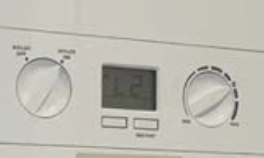
On the Ideal Logic Code Combi ESP1, the manufacturer defines L2 as an ignition lockout. In plain English, the boiler attempted to establish a safe flame but did not complete the ignition sequence, so it stopped. The code identifies the stage at which operation failed; it does not prove which component caused it.
Check the exact user guide for your Ideal model, because codes can vary. For models whose guide lists L2 as ignition lockout, Ideal’s homeowner checks include looking for an obvious condensate blockage and confirming that the property has a gas supply. If those checks do not restore operation, contact Ideal under warranty or a Gas Safe registered engineer. Do not remove the casing or keep resetting the boiler.
What does Ideal fault code L2 mean?
Ideal’s October 2023 Logic Code Combi ESP1 user guide lists L2 as “Ignition Lockout”. The installation and servicing guide routes L2 to its ignition-lockout fault-finding section, which is intended for engineers. This distinction matters: the display tells a trained engineer where to begin testing, but it is not a reliable diagnosis of a gas valve, electrode, fan, control board or any other individual part.
Some online lists use phrases such as “flame loss” for L2. On the cited Ideal guide, F2 is listed separately as flame loss, while L2 is ignition lockout. Always use the documentation for the exact model and generation shown on the appliance, rather than assuming every Ideal boiler uses codes identically.
Why has the boiler locked out?
A gas boiler must confirm safe conditions before and during ignition. If the required flame is not established or confirmed, its controls stop the sequence. Possible explanations range from a temporary gas-supply interruption or frozen condensate route to an internal ignition, sensing, gas or combustion issue. Only proper testing can separate those possibilities.
A lockout is a safety response, not an invitation to bypass a control. A reset may allow one fresh start after the approved checks, but repeated resetting can hide the pattern without repairing the cause.
Safe checks to make first
1. Confirm the exact code and boiler model
Photograph the complete display. Make sure it reads L2 rather than F2, L1, L6 or LC, since each means something different in Ideal’s guide. Find the model name without removing any panel and download its user guide from Ideal. The appliance’s serial details or paperwork may help if several similarly named versions exist.
2. Check whether there is a wider gas-supply problem
Ideal advises checking whether other gas appliances work, where it is safe and normal to use them. If none work, check whether the gas supply is on at the meter and whether a prepayment meter has credit. Do not dismantle a meter, appliance or gas fitting.
If you smell gas, stop. Do not try appliances, operate electrical switches or use a flame. Open doors and windows if safe, leave the affected area and call the National Gas Emergency Service on 0800 111 999.
3. Consider an exposed condensate pipe
Ideal’s L2 user guidance includes checking the condensate pipe for blockages and refers owners to its condensate section. A frozen external condensate pipe is more plausible during freezing weather, especially where plastic pipe runs outside before reaching a drain.
Only follow the exact user-level instructions for your model and an accessible external plastic pipe. Never remove the boiler casing, disconnect pipework or use boiling water. If the pipe is high, unsafe to reach, damaged, repeatedly freezes or cannot be positively identified, call an engineer.
4. Check ordinary controls and electricity
Confirm that the boiler has power, the programmer or thermostat is requesting heat, and there has not been a local power cut. These checks may not explain L2, but they prevent unrelated control problems being mistaken for the same fault. Do not open fused spurs or electrical covers.
5. Look at the pressure gauge
L2 is not Ideal’s low-water-pressure code on the cited model—F1 is listed for that condition. Still, recording the pressure helps the engineer understand the system. Compare it with the exact manual and do not add water simply because the boiler has locked out.
Should you press restart?
Follow the user guide for your precise boiler. Where Ideal authorises a restart after the stated checks, make one attempt using the normal restart control. Watch the display and note what happens. If L2 returns, stop resetting and arrange support.
Ideal also lists LC as five boiler resets within 15 minutes on the cited model. That is a clear reason not to repeatedly press restart. Multiple attempts do not create a stronger ignition source or repair a blocked drain, interrupted supply or internal fault.
What you should not attempt
- Do not remove the boiler casing.
- Do not inspect, clean or adjust ignition electrodes.
- Do not test the gas valve, burner, fan, flue or combustion settings.
- Do not bridge a safety control or try to defeat the lockout.
- Do not loosen gas, condensate or electrical connections.
- Do not order parts solely from the displayed code.
- Do not keep resetting when L2 returns.
Ideal’s servicing fault-finding information includes internal tests for registered engineers. It should not be turned into a do-it-yourself repair guide. Gas work and combustion checks require the right competence and equipment.
When to call Ideal and when to call an engineer
If the appliance is within its warranty, Ideal’s user guide directs owners to contact Ideal when the stated checks do not restore operation. Have the serial number, installation date and service history available. Warranty terms commonly require installation and servicing conditions to have been met, so keep the Benchmark record and invoices.
If the boiler is outside warranty, contact a Gas Safe registered engineer qualified for boilers. Use the official Gas Safe Register to verify the business and check the engineer’s ID card and categories on arrival.
Seek prompt help when L2 repeatedly returns, the boiler makes unusual ignition noises, the condensate system leaks, other gas appliances also fail, or vulnerable occupants are without heat. Treat any smell of gas or suspected carbon monoxide as an emergency rather than a routine repair booking.
What might an engineer check?
The engineer will use the model-specific fault-finding process and test results rather than the code alone. Depending on the appliance and circumstances, that may include the gas supply and working pressure, ignition and flame detection, condensate drainage, flue and air path, electrical connections, burner operation and control sequence.
This does not mean every one of those items is faulty. It explains why a quotation based only on “L2” can be misleading. A sound diagnosis should identify the evidence, the failed condition and the proposed remedy.
Could cold weather cause Ideal L2?
Yes, if an external condensate pipe freezes or blocks and the exact Ideal guide includes that condition in its L2 checks. The timing is informative: a first lockout during sub-zero weather, combined with a visible external pipe and no other gas-supply issue, makes condensate more plausible. It does not prove it.
Repeated freezing suggests the installation needs a longer-term assessment. Routing, fall, pipe sizing, insulation and manufacturer recommendations matter. A temporary thaw is not a substitute for correcting a persistently vulnerable arrangement.
What if other gas appliances are not working?
There may be a property or network supply interruption, an empty prepayment balance or another supply issue. Check only the normal meter display and controls you are authorised to use. Ask neighbours whether they are affected only if appropriate, and contact the supplier or network operator when there is no gas supply and no smell of gas.
If there is any smell of gas, do not continue fault-finding. Follow emergency guidance and call 0800 111 999.
Frequently asked questions
Is Ideal L2 definitely an ignition problem?
It is defined as ignition lockout in the cited Logic Code Combi ESP1 guide. Confirm your exact model manual because code schemes can differ. “Ignition lockout” describes the failed operating stage, not the individual faulty component.
Can low gas credit cause L2?
Ideal specifically advises checking prepayment-meter credit when confirming whether gas is available. After restoring a legitimate supply, follow the exact user-guide restart procedure once.
Can low boiler pressure cause L2?
On the cited model, Ideal assigns F1 to low water pressure rather than L2. Record the gauge reading, but do not assume topping up will solve an ignition lockout.
Will a reset permanently fix it?
A one-off interruption may clear after the authorised checks and one restart. A returning L2 means the cause remains or has recurred and needs professional diagnosis.
Can I replace the ignition electrode myself?
No. That involves opening and working inside a gas appliance. Use Ideal warranty support or a suitably qualified Gas Safe registered engineer.
How much will an L2 repair cost?
The code does not identify the part, so a responsible price depends on diagnosis, warranty position, model and required work. Ask what testing is included and obtain approval before chargeable repairs.
The practical conclusion
For the Ideal Logic Code Combi ESP1, L2 means ignition lockout. Confirm the model, check for an obvious supply issue and follow Ideal’s safe condensate guidance where relevant. Make no more than the restart attempts allowed by the exact manual. If the code returns, leave internal checks to Ideal or a Gas Safe registered engineer.
Related help: how to reset a boiler safely, frozen condensate pipes, and what boiler pressure should be.
Need help with your boiler?
Book an Incredaboil fixed-price boiler repair for clear pricing and professional help.