
Radiator balancing or sludge: how can you tell the difference?
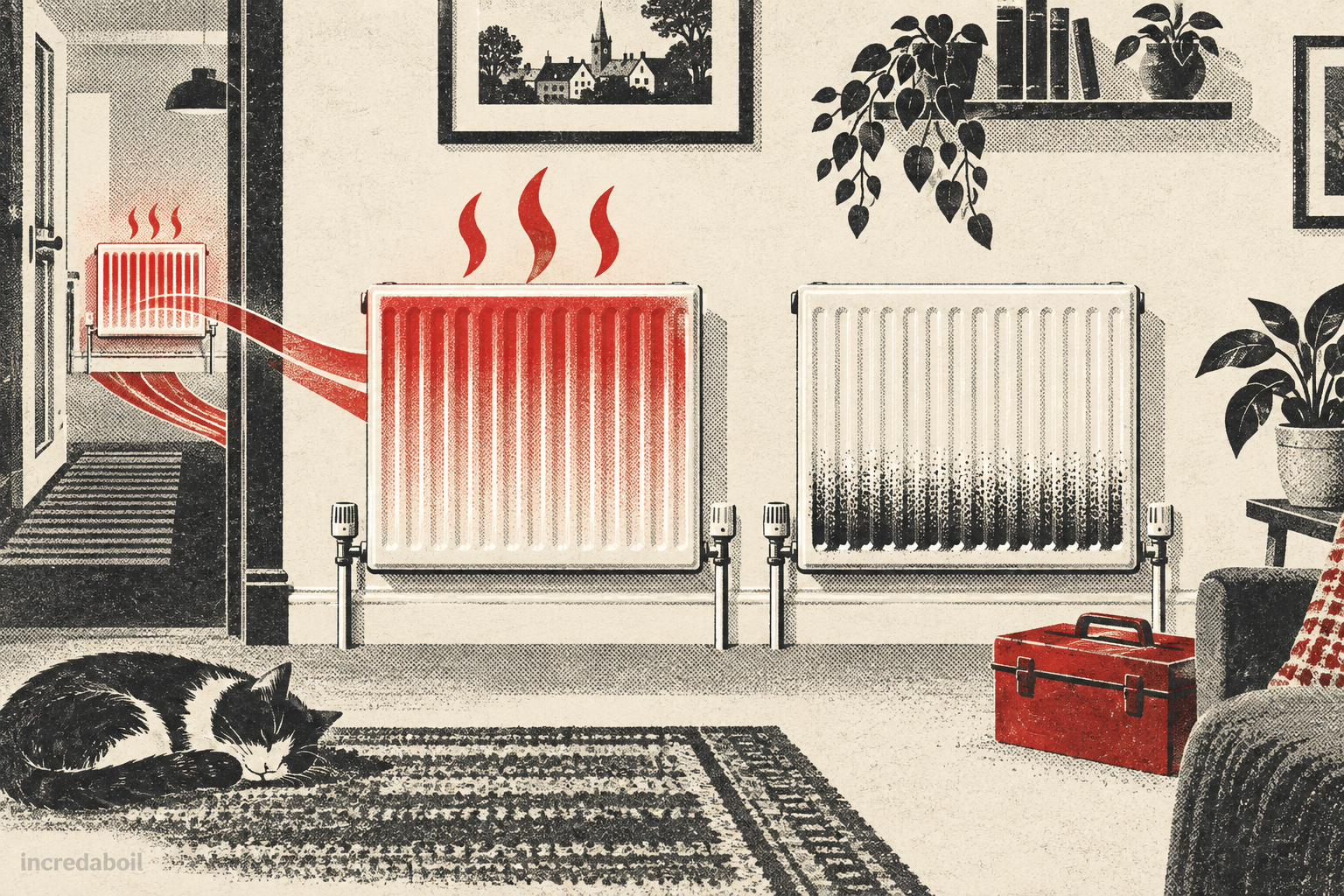
If some radiators heat quickly while others lag behind, the system may need balancing. If a radiator stays warm at the top but cold across the bottom, sludge or another restriction is more likely. The patterns can overlap, so look at the whole house before deciding what work is needed.
Balancing is about sharing the available water flow between radiators. Sludge is contamination that obstructs circulation or heat transfer. A badly balanced system usually creates differences between rooms; sludge often creates persistent cold-bottom or patchy areas within a radiator, sometimes with dark system water. Neither can be confirmed from one touch test alone.
Balancing and sludge are different problems
Hot water takes the easiest route through a central-heating system. Radiators close to the boiler or pump can receive more flow and warm quickly, while radiators further away receive too little. Balancing uses the radiator lockshield valves to distribute flow more evenly across the property.
Sludge is usually a mixture of corrosion products and other debris in the system water. Magnetite, a black iron oxide, can form when oxygen reacts with steel components. Debris can settle in radiators, restrict pipework and affect pumps, valves or boiler waterways.
Balancing cannot remove debris. Cleaning cannot correct badly distributed flow unless the system is also commissioned correctly afterwards. That is why the diagnosis matters.
Quick comparison

This is a guide to useful clues, not a remote diagnosis. A restricted valve, undersized radiator, weak circulation or pipework problem can mimic either pattern.
Vaillant describes balancing as adjusting flow so each radiator receives the water it needs. Common clues include large temperature differences between rooms, some radiators heating much sooner than others and long heat-up times in parts of the house.
A typical balance problem becomes clear from a cold start. The radiators closest to the boiler heat rapidly, while those at the end of the circuit remain cool or take much longer. The slower radiators may eventually warm across most of their surface if the heating runs for long enough.
The problem can begin after a radiator is replaced, a valve is changed, an extension is added or the system is drained. Altering one flow path affects the rest of the circuit, so settings that once worked may no longer distribute water properly.
Signs that sludge or restricted circulation may be involved
Worcester Bosch links a radiator that is warm at the top but cold at the bottom with sludge, debris or reduced circulation. Heavier contamination can settle in the lower channels and prevent hot water reaching the whole panel.
Other clues include:
- persistent cold bands or irregular patches within one radiator;
- several radiators with cold bottoms;
- black, grey, orange or brown material in a system-water sample;
- frequent trapped air, noisy circulation or recurring pump and valve problems;
- a hot flow pipe but a much cooler return; or
- performance that does not improve after correct bleeding and control checks.
ADEY says black or grey test material indicates existing corrosion, while orange or brown can indicate active corrosion. Water colour is evidence, but a few drops from one bleed vent do not show the condition of the complete system.
Do not confuse sludge with trapped air
Air rises, so a radiator that is cold at the top but warmer lower down often needs bleeding. Sludge tends to settle, which is why a cold-bottom pattern points in a different direction. Worcester Bosch uses this distinction in its homeowner guidance.
Switch the heating off and let the radiator cool before bleeding. Use the correct key, open the vent only slightly and close it when the hiss stops and water appears. Check boiler pressure afterwards against the exact model instructions.
If the top becomes warm after bleeding but the bottom stays cold, the radiator may have had more than one problem. Repeatedly bleeding it will not remove settled debris.
A safe way to assess the pattern
- Start with ordinary controls. Make sure the heating schedule is on, the room thermostat is calling for heat and the TRVs in the rooms being tested are open.
- Begin from cold. Let the whole system cool before switching the heating on. This makes the order of warming easier to observe.
- Record the order. Note which radiators heat first and which rooms remain cool after 20, 40 and 60 minutes.
- Check each radiator pattern carefully. Without touching very hot surfaces, identify whether the top, bottom or one side remains cooler.
- Note pressure and noise. Record the fully cold boiler pressure and any gurgling, rushing or knocking.
- Photograph persistent cold areas. A thermal camera is useful but not essential; a simple room-by-room record is still valuable.
Do not remove the boiler casing, open a pump, drain the system or use a chemical cleaner as a test. Those actions change the evidence and can create additional faults.
Can you balance radiators yourself?
Manufacturer guidance describes a homeowner process, but accurate balancing involves the whole system rather than turning one valve until a room feels warmer. Lockshield settings can be sensitive, radiator surfaces can be hot and the right temperature drop depends on the installation and design.
If the pattern is simple and you are comfortable following reliable instructions, record every original valve position and make only small changes. Stop if a valve leaks, will not move, or if you cannot identify the lockshield. Do not disturb pipe joints or use excessive force.
For a mixed symptom pattern, recent installation changes or a large property with zones, professional balancing is more reliable. An engineer can measure flow and return temperatures, check the pump and confirm that every circuit has adequate flow.
Does a cold bottom always mean a powerflush?
No. A cold-bottom pattern is a reason to investigate water quality and circulation, not an automatic instruction to buy one particular cleaning service. The restriction may be local to one radiator, or another circulation problem may be involved.
A heating engineer can inspect the temperature pattern, test system water and decide whether targeted radiator work, chemical cleaning, a system flush, valve repair or another remedy is proportionate. Worcester Bosch advises taking system-specific advice because every installation is different.
After debris is removed, the system should be refilled, protected and commissioned correctly. Otherwise corrosion or poor distribution can return.
Can poor balancing create a cold bottom?
Reduced flow can leave part of a radiator cooler, so the symptoms are not perfectly separate. Worcester Bosch notes that cold-bottom radiators can arise from sludge or poor water circulation. The stronger clue for balancing is a repeatable pattern between radiators: some get more than their share while others receive too little.
The stronger clue for sludge is a persistent internal pattern within a radiator together with dirty water or similar symptoms elsewhere. An engineer may need to check both before choosing a remedy.
What information helps an engineer?
- Which radiators heat first from a cold start.
- Whether the slow radiators eventually warm evenly.
- Whether cold areas are at the top, bottom or one side.
- Whether recently fitted radiators or valves changed the pattern.
- The boiler pressure when fully cold.
- Any dark water, recurring air or circulation noise.
- Whether hot water works normally and whether the home has multiple heating zones.
Frequently asked questions
Will bleeding fix a badly balanced system?
No. Bleeding releases trapped air. It does not redistribute water flow between radiators, though removing genuine air may make the heating pattern easier to assess.
Can sludge affect every radiator?
Yes. Contaminated water circulates through the system, although debris may settle more heavily in particular radiators or restrictions.
Why is one radiator hot while another stays cold?
Unequal flow is one possibility, but a closed or stuck valve, trapped air, local blockage or undersized radiator can create a similar result.
Should the radiator be the same temperature from top to bottom?
Some temperature drop is normal as water gives up heat. A pronounced, persistent cold band across the bottom is the concern.
Should I add inhibitor if the water is dark?
Not as a guess. The water condition, existing treatment and source of corrosion should be assessed first. Adding treatment without addressing contamination or oxygen entry may not solve the problem.
Related boiler-help guides
- How radiator balancing works
- Why are radiators cold at the bottom?
- How to recognise heating-system sludge
- Radiator stays cold after bleeding
Still unsure why your radiators heat unevenly?
Book a fixed-price boiler repair so the circulation and heating pattern can be checked properly.