
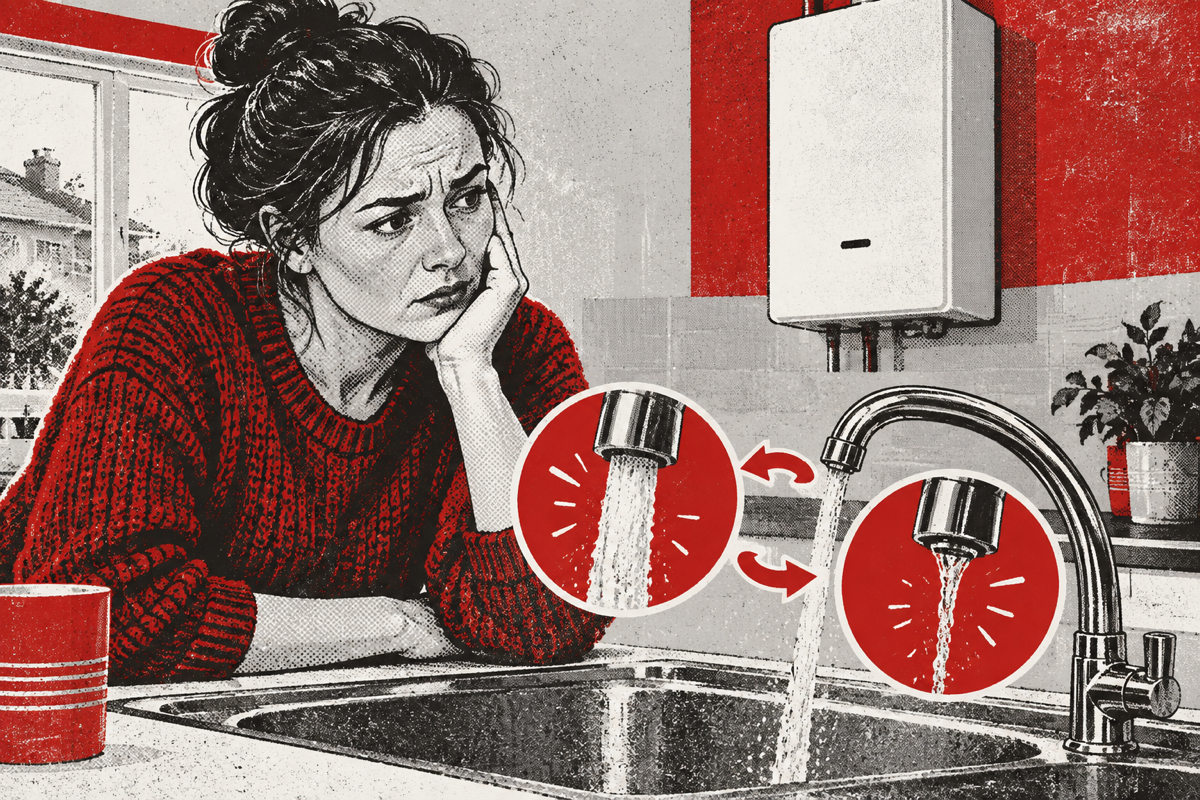
Why does hot water pulse at the tap?
Hot water that repeatedly changes between a strong and weak flow can be caused by the tap or shower, changing mains-water flow, or a combi boiler repeatedly detecting and losing hot-water demand. Start by finding out whether it affects one outlet or the whole home.
If only one tap pulses while other hot taps run steadily, the outlet, aerator or local pipework is the first place to investigate. If several hot outlets pulse but the cold flow remains steady, the boiler or hot-water route is more likely. If hot and cold both pulse, look at the incoming supply and household plumbing.
Pressure and flow are not the same
Pressure is the force pushing water through the pipe. Flow is the amount delivered over time. A supply can show reasonable static pressure with every tap closed but provide poor or changing flow when a bath, shower, toilet or appliance uses water.
WaterSafe notes that mains pressure and flow vary with the property, pipework and demand at different times of day. A combi also needs adequate dynamic flow while water is actually moving.
Check whether one outlet or every outlet is affected
- Run the problem hot tap at a normal, steady position.
- Try another hot tap separately and compare the rhythm.
- Compare the cold side at the same outlet.
- Repeat when no toilet, shower, washing machine or dishwasher is using water.
- Note what the boiler display does without opening its casing.
Do not run several very hot outlets unattended. The aim is a short comparison, not a prolonged test.
If only one tap pulses
A partly blocked aerator, worn mixer cartridge, flexible hose or local service valve can disturb flow at one outlet. A thermostatic mixer can also alter the blend as inlet conditions change. If every other outlet is steady and the boiler fires normally, a plumber should check that tap and its local pipework first.
Follow the tap manufacturer’s cleaning instructions for a removable aerator only if it is an ordinary user task. Do not dismantle a thermostatic mixer or hidden valve by guesswork.
If every hot tap pulses
A combi heats mains water as it passes through the appliance. Models need a minimum flow to recognise demand. If the flow repeatedly crosses that threshold, the burner may start and stop, so both flow and temperature can seem to pulse.
Possible causes include inadequate incoming flow, a restriction, scale in the hot-water route or a boiler sensor or control issue. The symptom does not identify which one. Record whether the flame or tap symbol appears and disappears, and whether an exact fault code is shown.
If hot and cold both pulse
That points away from a heat-only problem. Check whether the pattern coincides with a toilet filling, washing machine valve opening, shower running or peak demand in the area. Ask neighbours only if it is convenient; do not delay reporting a severe supply problem.
Compare the first cold mains tap—usually the kitchen tap—with other outlets. Your water supplier or a WaterSafe-approved plumber can assess a wider supply or internal plumbing issue.
Does temperature pulse as well?
Separate a change in force from a change in heat. A stream can become weaker but remain hot, or stay similar in volume while alternating warm and cool. On a combi, faster water flow gives the boiler less time to heat each litre, while lower flow usually allows a greater temperature rise.
If the flow is steady but temperature fluctuates at every outlet, the boiler response needs diagnosis. If only a shower changes temperature, the shower valve or competing cold-water demand may be responsible.
Safe details to record
- which hot and cold outlets are affected;
- whether the pulse is regular or random;
- whether another appliance is taking water;
- the boiler’s visible demand symbol and exact code;
- whether pressure at the boiler gauge changes—this is a separate sealed-heating reading; and
- whether the symptom is worse at particular times.
Keep the boiler casing closed. Do not adjust internal valves, bypasses or sensors. Never confuse the radiator-system pressure gauge with mains tap pressure.
When should you arrange help?
Arrange a plumber or heating engineer if the symptom persists, affects several outlets, is accompanied by leaks or noises, or makes water unpredictably hot. If the boiler repeatedly loses demand, locks out or shows a fault, use an appropriately qualified Gas Safe registered engineer.
A gas smell, carbon-monoxide alarm, burning smell or water affecting electrics is an emergency rather than an ordinary flow fault. Move away from danger and follow the appropriate emergency advice.
The short answer
Compare another hot tap and the cold side. One pulsing outlet usually points to the tap or local pipework. All hot outlets suggest a shared hot-water or boiler issue. Hot and cold pulsing together suggests the incoming supply or household plumbing. Record the pattern rather than dismantling anything.
Hot-water flow still pulsing?
Record the affected outlets and boiler response before arranging a diagnosis.