
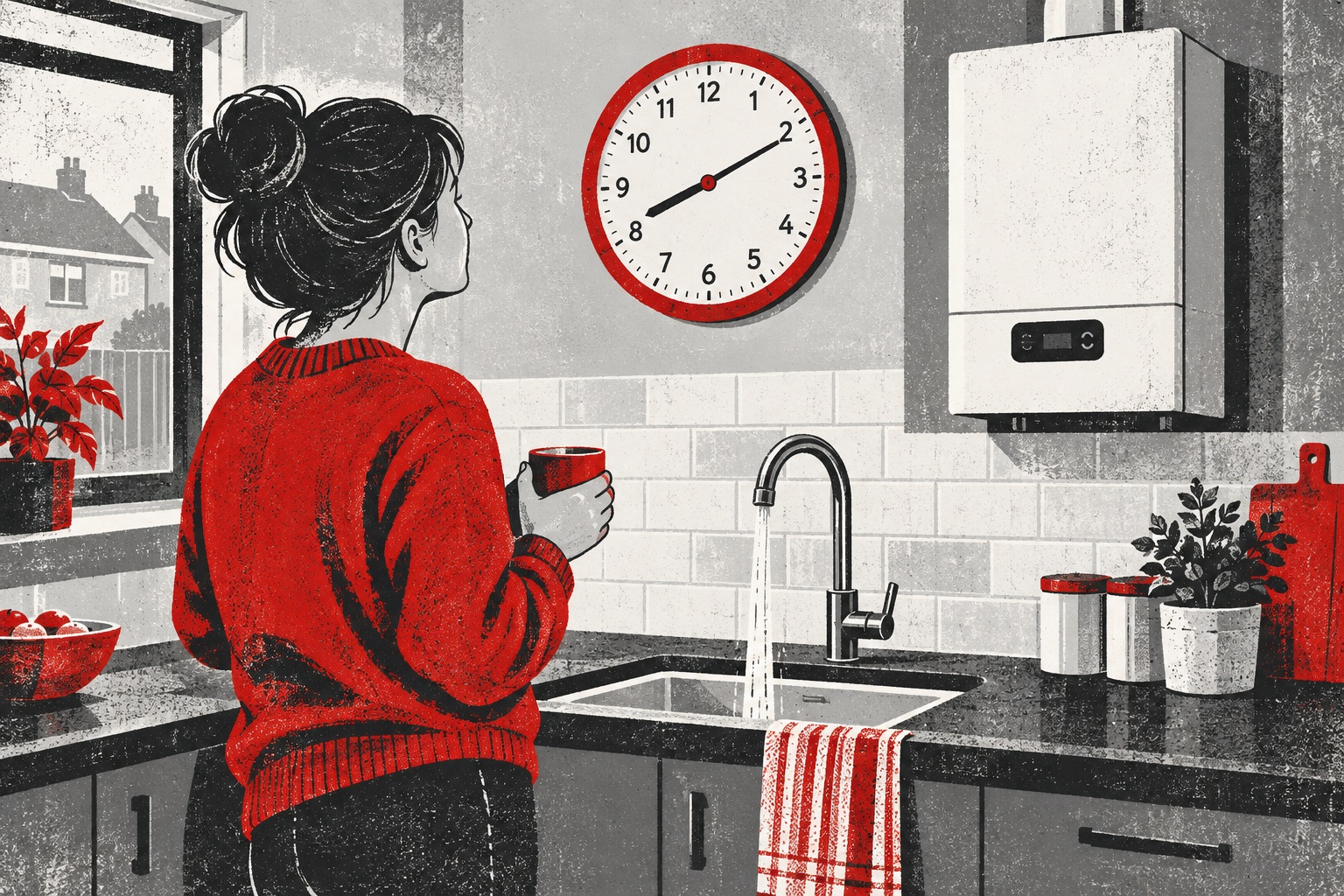
Why does hot water take longer after the boiler has been idle?
After a long idle period, a combi boiler and the water in the hot pipework have cooled. When you open a tap, the boiler must detect the flow, ignite and transfer heat while the cooled water already in the pipe runs out. That can make the first hot-water use of the day slower than later uses.
A modest, repeatable delay can be normal. A delay that is new, getting longer, affects boiler ignition or comes with unstable temperature or weak flow should be investigated.
The short answer
Time how long it takes for the boiler to recognise the tap and how long hot water takes to reach the outlet. These are two different delays. If the display changes promptly but the tap stays cold, the pipe run and flow rate may explain much of the wait.
If the boiler does not recognise the tap, repeatedly tries to ignite, shows a fault or delivers alternating hot and cold water, keep the casing closed and arrange a professional check.
A combi starts heating on demand
A combi boiler normally heats mains water when a tap or shower asks for it. After hours without demand, internal components are cooler than they were after a recent shower or wash.
The boiler needs a short start-up sequence before useful heat reaches the water. Later demands may feel quicker because the appliance and nearby pipework are still warm.
Cooled water must leave the pipe first
Water left between the boiler and tap cools while it is unused. That water comes out before newly heated water arrives. A distant bathroom with a long pipe run will usually take longer than a kitchen tap close to the boiler.
Flow rate changes the waiting time. A very gentle stream clears the cooled water slowly, while a normal washing flow clears it faster. Do not run the tap at an unsafe temperature or waste water repeatedly just to test the timing.
Eco and preheat modes can change the delay
Some combi boilers have an eco, comfort, warm-start or preheat setting. Worcester Bosch explains that eco mode does not keep the boiler warm between demands, so hot-water delivery can take a little longer. Preheat keeps part of the appliance warm for a faster response but uses energy while no tap is open.
The names and controls vary by model. Check the official user manual before changing a setting, and remember that a preheat function cannot remove the travel time through a long pipe.
A power interruption may change the setting
Some boilers return to a default hot-water mode after power has been interrupted. If the delay appeared after a power cut, electrical work or the boiler being switched off, compare the display with the user manual.
Do not enter installer menus or alter service settings. If the normal user control no longer behaves as the manual describes, include that detail in the repair report.
Compare one outlet with the rest
If every hot tap is slower only after a long idle period, boiler start-up or a shared setting becomes more relevant. If one tap is always slow, its distance, flow, tap cartridge, flexible hose or local pipework deserves attention.
Compare hot and cold flow at the same outlet. Weak flow on both sides can point to the outlet or supply rather than the boiler. Do not remove tap parts or adjust hidden valves as a test.
Cold mains water can make the first use feel slower
In colder weather, incoming mains water and pipework can be cooler. The boiler has more work to do to raise that water to the selected temperature, and a long unheated pipe run may contain a larger volume of noticeably cold water.
Seasonal variation should still be steady and predictable. A sudden change from one day to the next is more likely to need investigation.
What if the home has a hot-water cylinder?
A system or heat-only boiler usually heats stored water in a cylinder rather than producing tap water instantly. After an idle period, the cylinder schedule, stored-water temperature, immersion heater and pipe run may all affect the wait.
Check the normal programmer and cylinder controls only. Do not lower stored-water temperatures or alter concealed controls without qualified advice, because safe storage temperatures and system design matter.
Signs the delay is not just normal cooling
Arrange a check if the delay is steadily increasing, the boiler fails to detect small but normal tap flows, the burner starts and stops repeatedly, water turns hot then cold, the flow has weakened, a fault code appears or the boiler becomes noisy.
If you smell gas, suspect fumes or a carbon-monoxide alarm sounds, stop using the appliance, ventilate, leave if necessary and call the National Gas Emergency Service on 0800 111 999.
Useful details to record
- The boiler make, model and displayed hot-water mode.
- How long the boiler had been idle.
- Time until the display recognises demand.
- Time until warm water reaches each outlet.
- Whether hot and cold flow are both weaker.
- Any recent power interruption or setting change.
- Any fault code, noise or temperature fluctuation.
Related Incredaboil guidance
If one outlet is much slower than the others, read why hot-water arrival times differ between taps. If the boiler stays active after the tap closes, see why a boiler may run on after hot-water use.
First hot-water demand keeps getting slower?
Keep the timing and display details handy, then see the repair route.