
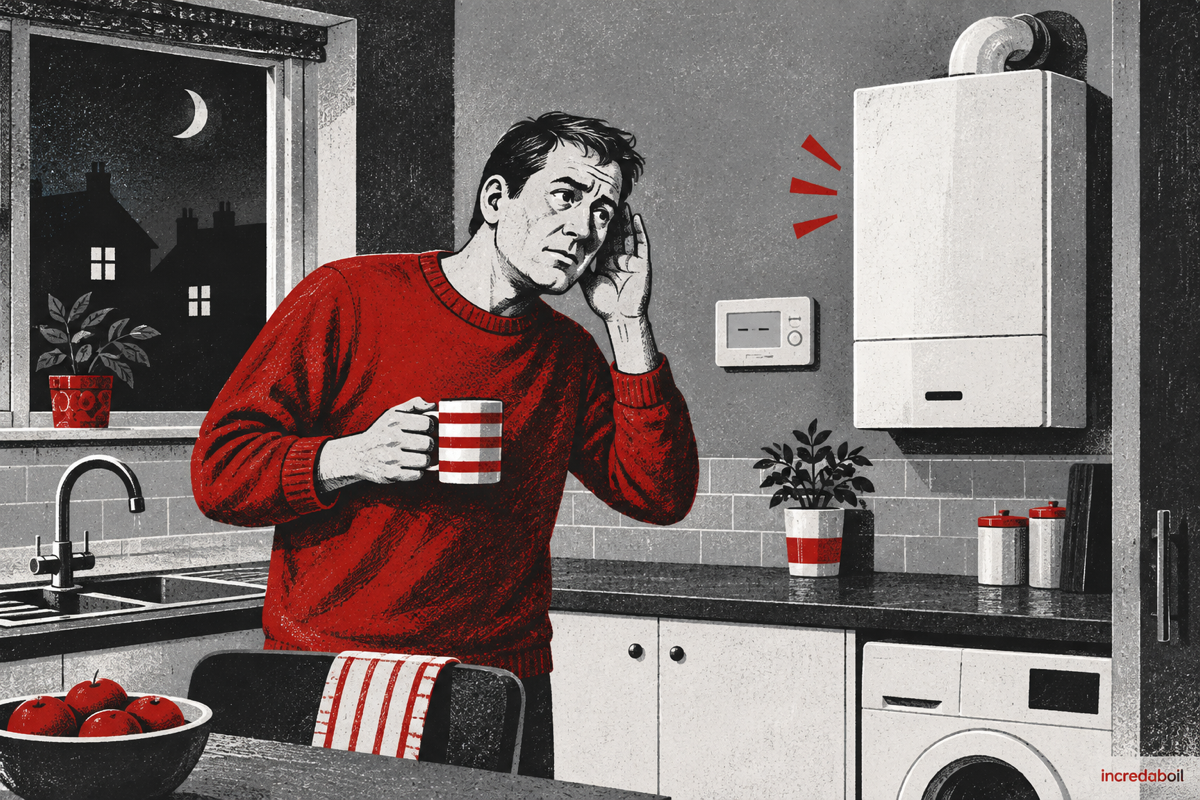
Why does my boiler fire when no heating or hot water is on?
A boiler that starts briefly when no tap is open and the room thermostat is not asking for heat is not automatically faulty. Modern boilers can run short, deliberate cycles for hot-water preheat, frost protection, pump overrun or pump protection. A programmer, hot-water cylinder or smart control may also be making a demand that is not obvious at the wall thermostat.
The important distinction is between a short, occasional cycle with a clear explanation and repeated firing that overheats radiators, uses noticeably more gas, produces a fault code or continues despite every control being correctly off. Do not remove the casing to find out which one it is. Start with the display, timing and user controls.
First confirm what “firing” means
A pump or fan can run without the burner being alight. You may hear water moving, a low hum or a fan after a normal heating cycle has ended. Vaillant’s technical status information, for example, distinguishes burner operation from pump and fan overrun. Worcester Bosch documentation also describes a short pump overrun that carries residual heat away after a demand ends.
Look at the normal user display without pressing installer controls. A flame symbol usually indicates burner operation, while a radiator, tap or status symbol may show the current mode. The exact symbols differ by model, so check the operating manual rather than relying on a generic online chart.
Common normal reasons for an unexpected cycle
Combi boiler hot-water preheat
Some combi boilers keep a small amount of water inside the appliance warm so hot water reaches the tap more quickly. Worcester Bosch says it is normal for a boiler in PreHeat mode to fire during the day when there is no active heating or tap demand. Its Eco mode disables that keep-warm firing, although hot water may then take a little longer to arrive.
Names vary between manufacturers: preheat, comfort, warm-start and eco may not mean exactly the same thing on every model. Use the manual for your boiler before changing a setting. If the behaviour matches the documented preheat cycle and stops in the model’s economy setting, that is useful evidence rather than a repair.
Frost protection
A boiler can protect itself when its internal temperature becomes very low. Manufacturer documentation shows that frost protection may run the pump and, at a lower temperature, fire the burner until the boiler water warms. This can happen even when ordinary space heating is off.
Built-in protection normally protects the appliance, not every exposed pipe in the property. Do not switch off power or gas to a boiler in freezing conditions merely to stop a short frost cycle. If frost protection runs frequently in a cold cupboard, garage or vacant property, ask an engineer whether the installation and controls are suitable.
Pump or fan overrun
After heating or hot-water demand ends, a pump may continue briefly to move residual heat through the system. The burner should be off during a simple pump overrun. A short hum immediately after a normal cycle is therefore different from a new flame appearing much later.
Automatic pump protection
Some boilers run a pump for a few seconds after a long period without central-heating demand to help prevent it sticking. Worcester Bosch technical material describes an anti-seize cycle after 24 hours on an applicable model. The interval and behaviour are model-specific.
A demand may be present even when the room thermostat looks off
A combi boiler responds to hot-water flow as well as heating controls. A dripping hot tap, mixer valve or appliance drawing warm water may create a small demand. Check that taps and showers are fully closed and note whether firing coincides with a dishwasher, washing machine or another outlet being used.
Homes with a hot-water cylinder can have a separate schedule or cylinder thermostat. The boiler may be reheating stored water while the room thermostat is satisfied. Zoned systems can also have more than one room control. Check the programmer, app and cylinder schedule rather than assuming the main hallway thermostat controls everything.
Smart controls can start early to reach a target temperature by the programmed time, protect against low temperatures or follow an automation created in the app. Review the visible schedule, away setting and any optimisation option. Do not delete settings blindly; take screenshots first.
Safe checks you can make
Record the timing
Note when the boiler starts, how long it runs and whether a flame symbol appears. Record the outdoor temperature and what happened just beforehand. A ten-second pump sound after hot water use tells a different story from the burner lighting every few minutes overnight.
Read the status display
Photograph the full display. Look up the current status or operating symbol in the exact user manual. Do not enter installer menus or change diagnostic parameters. A status is not necessarily a fault code.
Check all ordinary schedules
Review central heating, stored hot water, smart-home routines and holiday or frost settings. Make sure the clock is correct after a power cut or daylight-saving change. If you rent, ask the landlord or managing agent before altering shared or unfamiliar controls.
Check preheat or comfort mode
If your combi manual describes a user-selectable preheat setting, compare the behaviour with the manufacturer’s explanation. Use only the documented user control. Do not open the appliance or change service parameters.
Check for a hot-water draw
Make sure hot taps are closed and note whether the water meter moves when no water should be in use. A moving meter can have several causes and does not diagnose the boiler, but it may justify a plumbing check.
When unexpected firing suggests a fault
Arrange an engineer if the burner repeatedly lights with every documented demand disabled, radiators heat when the heating is off, the boiler short-cycles every few minutes, pressure behaves abnormally, or a fault code appears. Also seek help if the behaviour began suddenly and cannot be linked to weather, a control change or preheat.
Possible causes can involve controls, sensors, water-flow detection, motorised valves or internal components. Those are diagnostic categories, not DIY targets. The engineer should identify the exact appliance and control system, observe the demand signals and follow the manufacturer’s test procedure.
Why radiators may warm when only hot water is wanted
On a combi system, radiators should not normally become hot merely because a tap is used. On a system with stored hot water, some pipework may warm during cylinder heating, but whole radiators heating unexpectedly can point to a control or valve problem. Note which radiators warm and when, then arrange assessment.
Do not try to free or dismantle a valve beside the cylinder or inside the boiler. These systems can contain hot water and electrical components, and some checks fall within gas-appliance work.
What not to do
- Do not remove the boiler casing.
- Do not disable frost protection during cold weather.
- Do not switch the boiler off at the mains as a routine way to stop cycling.
- Do not alter installer parameters, pump settings or internal valves.
- Do not assume every brief pump or fan sound means the burner is using gas.
- Do not repeatedly reset a boiler that shows a returning fault.
Gas Safe Register explains that many boiler casings form part of the combustion circuit. Internal work should be performed by a suitably qualified Gas Safe registered engineer.
Is it wasting gas?
Preheat uses some energy to improve hot-water response, which is why manufacturers often provide an economy option. Frost and pump-protection cycles serve a protective purpose. Before changing anything, identify the actual mode and use the official instructions for that model.
If the burner operates for long periods or unusually often without a clear demand, an engineer can check whether the controls and appliance are working as intended. Your notes about timing are more useful than an estimate based only on sound.
Gas and carbon monoxide safety
Unexpected firing alone is not proof of a gas emergency. If you smell gas or suspect an appliance is unsafe, HSE advises opening doors and windows, turning off the gas at the meter if you know how, and calling the National Gas Emergency Service on 0800 111 999. Avoid switches, flames and sparks.
If a carbon monoxide alarm sounds or anyone develops headache, dizziness, nausea, weakness, confusion, chest pain or shortness of breath, go outside and seek medical advice. The NHS says severe symptoms such as breathing difficulty, sudden confusion, collapse, marked weakness or chest pain require 999 or A&E.
Frequently asked questions
Why does my combi boiler fire when no tap is open?
Hot-water preheat is a common explanation. Frost protection and other short protective cycles are also possible. Check the display and exact manual to identify the mode.
Why does the boiler run for a few minutes after the heating turns off?
The pump or fan may be dissipating residual heat. If there is no flame symbol, the burner may already be off. A long or newly repeated cycle should be checked.
Can a smart thermostat turn the boiler on by itself?
It can create demand from a schedule, optimisation feature, frost setting or automation. Review the app history and settings, but remember the boiler may also have its own protective functions.
Should I turn preheat off?
That is a comfort-versus-energy choice where the manufacturer provides a user setting. Follow the model manual; hot water may take longer to reach the tap in economy mode.
Related boiler help
- Why does my boiler keep turning on and off?
- Boiler fires but radiators stay cold
- Why does my boiler ignite when a cold tap runs?
Is the boiler firing repeatedly without a clear demand?
Review the repair service details and arrange a professional diagnosis.