
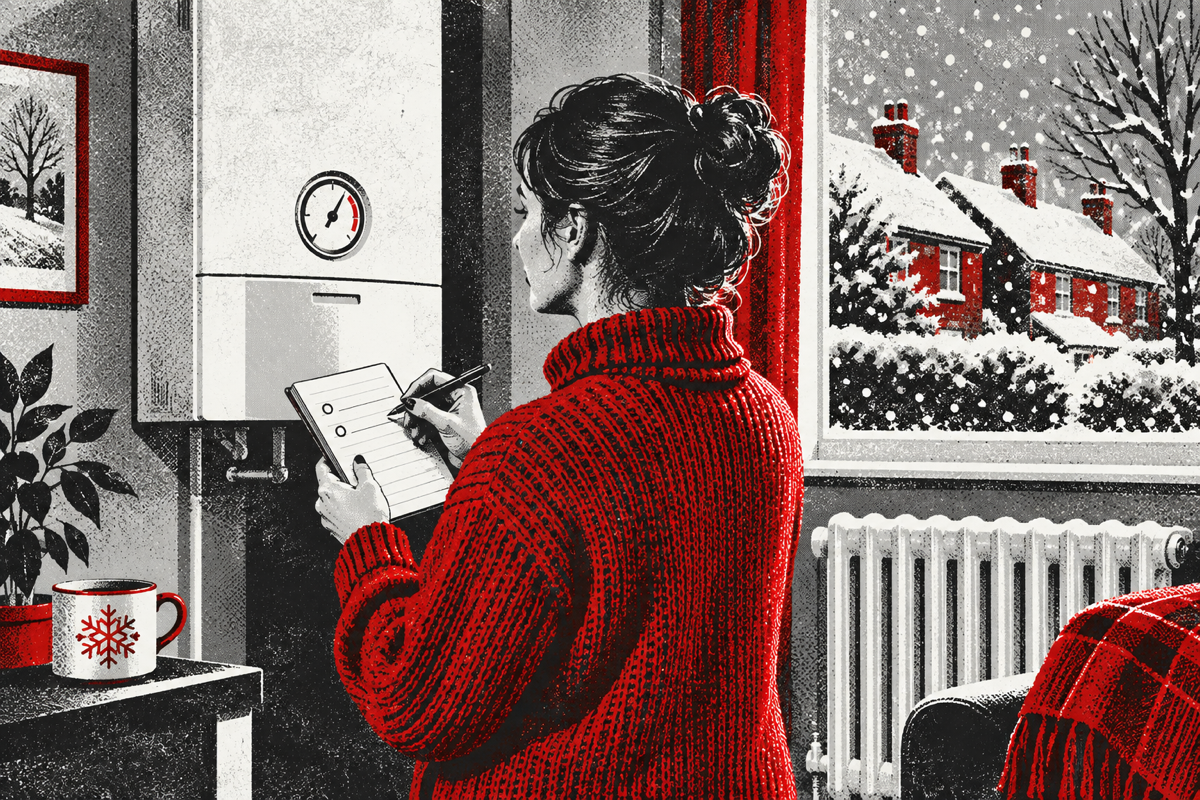
Why does my boiler pressure change when the weather turns colder?
Colder weather does not directly “pressurise” a sealed boiler system, but it changes the conditions in which you read the gauge. The system may start from a lower water temperature, run for longer and reach a higher operating temperature. That makes the difference between the cold and hot pressure easier to notice.
A modest rise while the heating warms up, followed by a return towards the original reading as it cools, is expected on many sealed systems. Pressure that keeps falling, rises sharply, reaches a warning area or does not settle again needs attention.
Why pressure changes as heating water warms
Most combi and system boilers work with a sealed circuit of water for the radiators. Water expands as it warms. The system’s expansion vessel is designed to accommodate that change, so the gauge normally reads higher when the heating is hot than when it is fully cool.
Manufacturer examples often show a cool reading around 1 to 1.5 bar and a higher reading while the boiler is operating, but those figures are not universal. The correct range depends on the boiler and installation. Use the coloured zone, user manual and installer advice for your system rather than copying a neighbour’s number.
What cold weather changes
On a mild day, the heating may run briefly and the water may not travel far from its resting temperature. During a cold spell, the property loses heat faster, the boiler runs for longer and the radiator circuit may spend more time at its operating temperature. The hot pressure can therefore be visible for longer.
The starting point may also be different. Water and pipework in an unheated part of the home can be cooler after a cold night. Comparing that cold reading with a gauge seen halfway through a long heating cycle can make the change look dramatic even when each reading is normal for its condition.
Weather-compensated controls can alter the heating flow temperature according to conditions outside. On suitable systems, colder weather may mean hotter radiator water. That can change the hot pressure slightly, but it should remain within the model’s permitted range.
Compare like with like
A useful pressure record separates three conditions:
- Fully cool: check before the heating starts, after the system has had time to cool.
- Operating: check after the radiators have been heating for long enough to become warm.
- Cooled again: check after the demand has ended and the system has returned towards room temperature.
Write down the time, outside conditions and whether heating or hot water was running. Take a photograph of the display if it is safe to do so. A small set of comparable readings is more useful than repeatedly watching the needle minute by minute.
What pattern is usually reassuring?
The cold reading is stable, the pressure rises gradually as the radiators heat, stays within the normal operating area and then falls towards its starting point as the system cools. The boiler continues to work without a fault code, water discharge or repeated need for topping up.
The exact number matters less than the repeatable pattern and the boiler’s own stated range. Some digital displays also round readings, so a small apparent step may simply be how the value is shown.
When does the change suggest a fault?
Arrange a professional check when any of these patterns appear:
- the pressure rises by a large amount every time the heating warms;
- the gauge enters a high-pressure or warning area;
- water drips from an external copper discharge pipe;
- the cooled reading is lower after every heating cycle;
- you need to add water repeatedly;
- the pressure rises even when the heating remains off and cool; or
- the boiler locks out or shows a pressure-related fault.
A large hot rise can involve the expansion vessel. A steady rise while the system is off can have a different cause, such as water passing through a filling route. A falling reading can indicate water loss. These possibilities require diagnosis; the gauge alone cannot prove which component is responsible.
If pressure creeps upward while everything is cool, read why boiler pressure may rise with the heating off.
Could there be a leak?
Check only areas that are safely visible: radiator valves, accessible pipe joints, the floor below the boiler and any known discharge pipe outside. Very small leaks can evaporate on warm components or hide below floors, so no visible water does not rule one out.
Do not remove the boiler casing or reach behind electrical equipment. If you find dampness, photograph its position and protect nearby furnishings without disturbing the connection.
Should I keep topping the pressure up?
No. Repressurising may be an ordinary user task on some boilers, but it should not become a routine response to unexplained pressure loss. Repeatedly adding fresh water can introduce oxygen and dilute the corrosion inhibitor in the heating circuit.
Only use the model-specific user instructions and stop at the stated cold pressure. Filling arrangements differ. If you cannot identify the correct controls, a valve will not close, or the pressure drops again, arrange an engineer rather than experimenting.
Do not release water just because the hot reading is higher
If the system is within its operating range, bleeding a radiator solely to lower a warm reading can leave the boiler under-pressurised once it cools. Radiator bleeding is for trapped air, not a general pressure adjustment.
If a radiator is cold at the top and the user instructions support bleeding, switch the heating off and let it cool first. Afterwards, check the cold pressure. Persistent air, repeated pressure changes or dirty water need a system assessment.
What should tenants do?
Record the cold and hot readings, any display message, visible leak and the date the change began. Report repeated pressure loss or a large rise to the landlord or managing agent. Do not keep refilling a system you do not understand or arrange work on the boiler without authorisation, except to follow emergency safety advice.
When is it urgent?
Stop using an appliance you suspect is unsafe. A gas smell, carbon-monoxide alarm, burning smell, smoke or water affecting electrics is not an ordinary pressure query. Move away from danger and follow the emergency advice for that hazard.
Keep the boiler casing closed. Work on a gas appliance must be carried out by an appropriately qualified Gas Safe registered engineer.
The short answer
Cold weather usually makes normal hot-to-cold pressure movement easier to see because the system begins cooler and heats for longer. Compare readings under the same conditions. A stable cold reading and a gradual, reversible rise are generally reassuring; repeated loss, a large hot rise, continued cold rise or discharge water needs professional diagnosis.
Pressure pattern changed this winter?
Record cool, operating and cooled readings before arranging a diagnosis.