
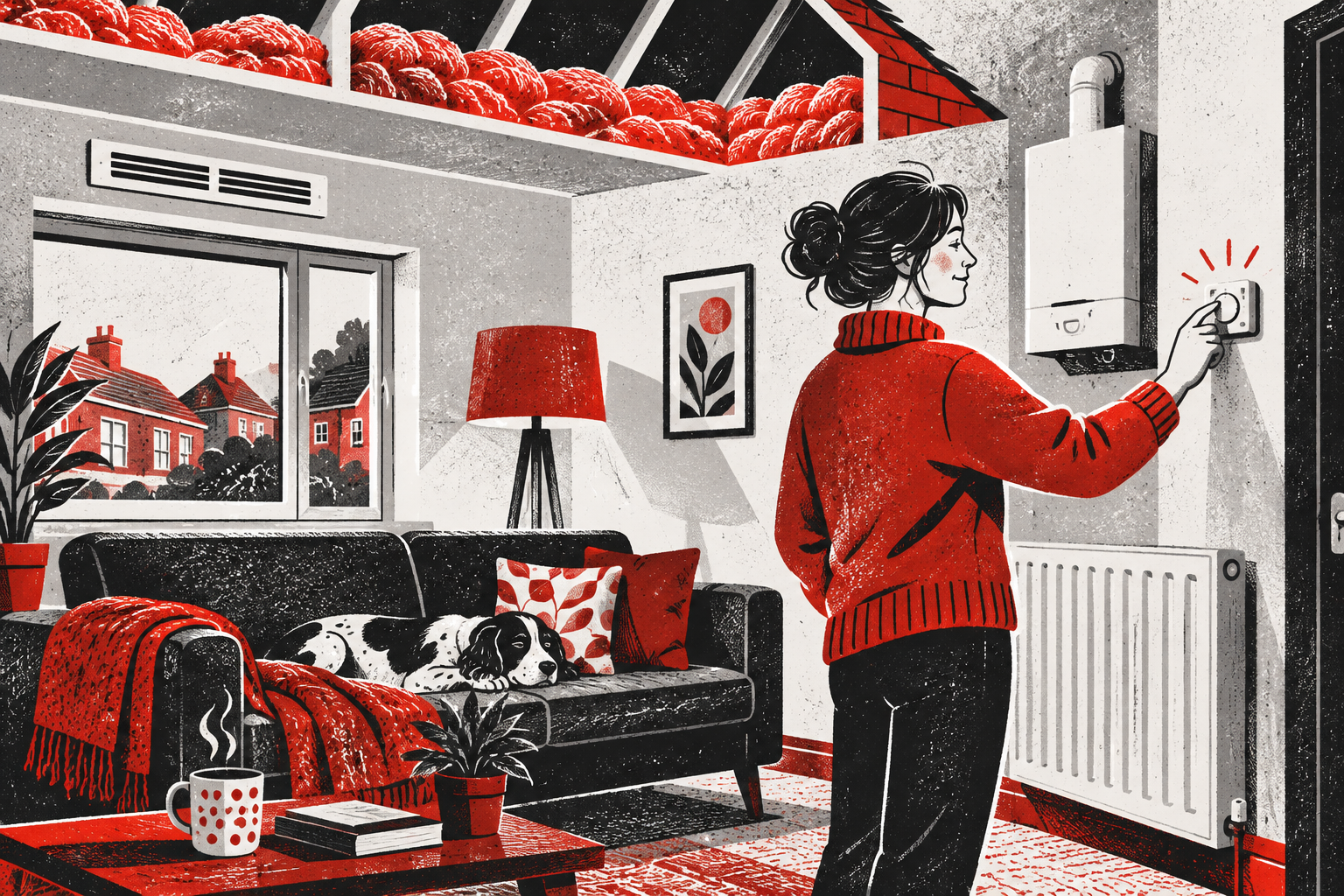
Why does my heating behave differently after insulation was added?
Insulation slows the rate at which your home loses heat. That can make rooms warm sooner, stay warm for longer and need shorter heating periods. Your boiler, thermostat and radiator valves may therefore behave differently even when nothing is broken.
The useful question is whether the change is simply a better-insulated home responding to old settings, or whether the work has revealed uneven heating, poor control or a ventilation problem.
The short answer
After loft, wall or floor insulation, the same heating schedule and thermostat setting may deliver more warmth than before. The boiler may run for shorter periods, stop sooner or cycle differently because the thermostat reaches its target more quickly.
Start by observing the pattern over a few normal heating periods. Avoid changing several controls at once, as that makes it harder to tell which adjustment helped.
Why the home now warms and cools differently
Before insulation, heat escaped through the roof, walls or floor more quickly. The heating system had to replace that lost heat for longer. Insulation reduces that loss, so the building holds on to warmth and cools more slowly after the boiler stops.
This can feel unfamiliar. A room that used to take an hour to feel comfortable may now reach the thermostat temperature much sooner. Sunshine, cooking and people in the room can also have a greater effect because that extra warmth is retained for longer.
Recheck the heating schedule
An old schedule may now start the heating earlier than necessary or leave it running after the home is comfortable. Note when the first occupied room becomes warm and when it begins to cool after the heating stops.
Make small changes using the normal user controls and allow time to judge them. A programmer controls when heating is available; a room thermostat controls the target temperature. They do different jobs, so changing both together can hide the cause of an uncomfortable result.
Check the main thermostat’s surroundings
A room thermostat responds to the air around it. If insulation work changed furniture, curtains, draughts or how heat moves through the room, the thermostat may now reach its target sooner than the rest of the home.
Keep the thermostat clear of furniture, curtains and direct heat sources. Do not cover it or move a wired control yourself. If its position no longer represents the home, ask a heating engineer to review the controls.
Look at each room, not just the boiler
Thermostatic radiator valves, often called TRVs, limit heat room by room. Rooms that now overheat may need a lower normal TRV setting, while a persistently cold room could point to heat distribution, a closed valve, trapped air or a gap in the insulation.
Change one room setting at a time and use it normally. Do not shut every radiator valve or alter hidden balancing valves. Balancing is an engineer task because changes in one part of the system affect flow elsewhere.
Uneven results can reveal gaps
If most rooms improve but one wall, ceiling or corner remains noticeably cold, the heating may not be the only explanation. Missing insulation, thermal bridging, draughts or moisture can make one area behave differently.
Photograph visible condensation, damp patches or a clear temperature pattern and contact the insulation installer or retrofit assessor. Do not assume turning the boiler temperature higher will correct a problem with the building fabric.
Do not block ventilation
Insulation and draught-proofing must work alongside suitable ventilation. Keep permanent vents and trickle vents in the condition advised for the property, and use extractor fans when cooking or bathing.
New condensation, stale air or mould is not a reason to block vents or simply run the heating harder. Ask the installer or a ventilation specialist to review the whole-home arrangement, especially if the work substantially reduced draughts.
Why the boiler may cycle differently
Once the home loses less heat, the boiler may satisfy demand more quickly. Shorter burns followed by longer pauses can be normal. Very rapid repeated starts, new noises, a fault code or rooms that never reach temperature deserve attention.
Boiler flow temperature and weather-compensation settings can affect how the system responds, but the right setting depends on the appliance, controls and radiators. Use only the user controls described in the manufacturer manual and ask an engineer before changing technical menus.
When to arrange a heating check
Arrange an assessment if the change is severe, the boiler locks out, pressure repeatedly changes, radiators remain cold, controls disagree or the home swings between too hot and too cold. Tell the engineer what insulation was added and when the behaviour changed.
If you smell gas, suspect fumes or a carbon-monoxide alarm sounds, turn off the appliance if safe, ventilate, leave if necessary and call the National Gas Emergency Service on 0800 111 999.
Useful details to record
- The insulation type, rooms affected and completion date.
- Current heating times and thermostat setting.
- How long the home now takes to warm and cool.
- Which rooms overheat or remain cold.
- Any condensation, damp or ventilation change.
- Any boiler code, new noise or pressure change.
Heating still feels wrong after the upgrade?
Keep the before-and-after pattern handy, then see the repair route.