
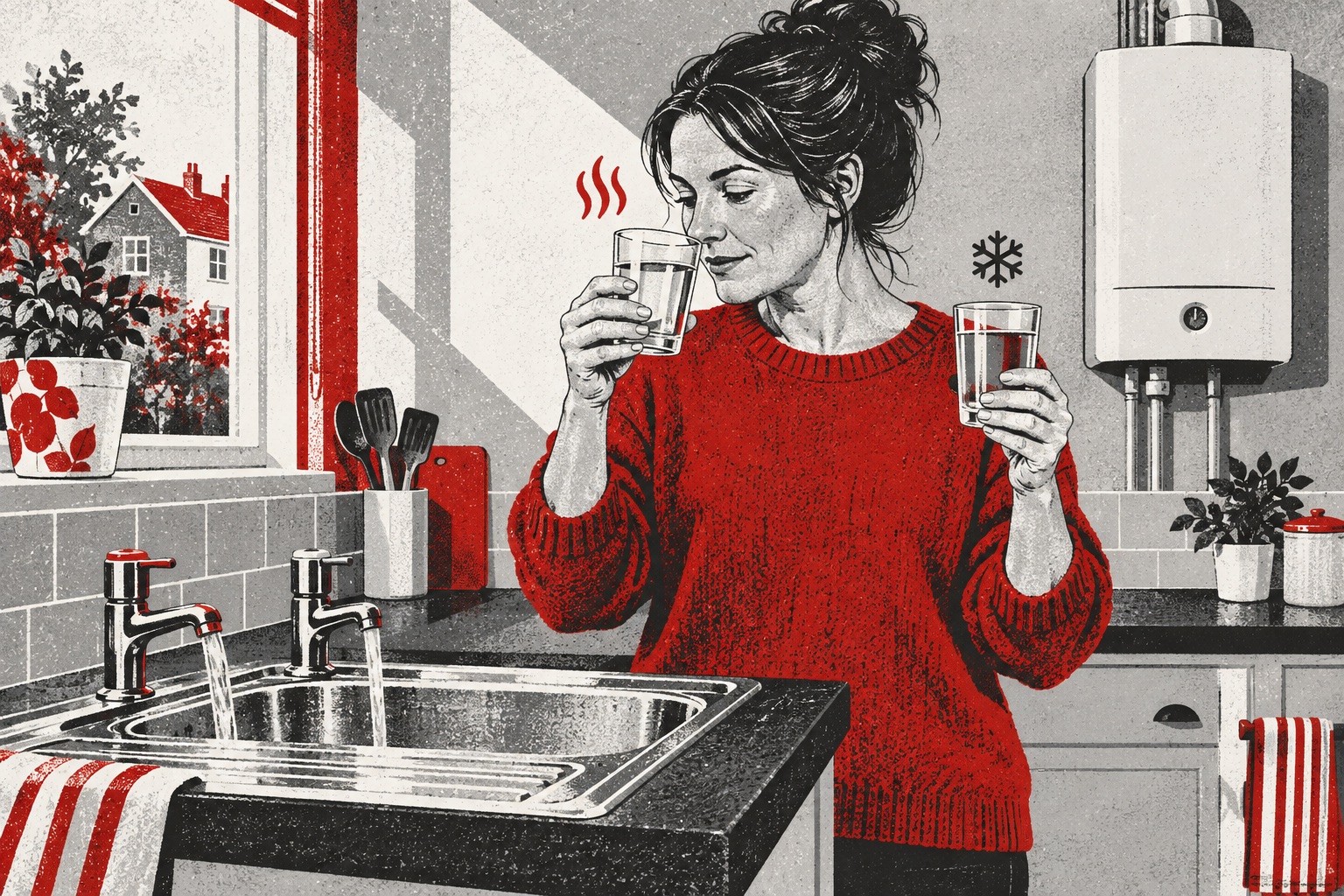
Why does my hot water smell different from the cold water?
If freshly drawn cold water smells normal but the hot water does not, the cause is more likely to be inside the home than in the public water main. The hot-water pipework, a tap or hose, a stored-water cylinder, a water treatment device or even the sink drain can all change what you notice.
Do not try to identify the cause by drinking hot water. The Drinking Water Inspectorate advises using freshly drawn cold water from the kitchen mains tap for drinking and cooking.
First check whether the smell is really in the water
Fill a clean glass from the affected hot tap, move away from the sink and let it cool before smelling it. If the smell disappears away from the basin, the plughole, overflow or waste pipe is the more likely source. Warm water can make a drain smell easier to notice even though the water itself is normal.
If the smell remains in the glass, compare it with freshly drawn cold water from the same tap. Then compare hot water from another outlet. These simple comparisons narrow the problem without opening the boiler, cylinder or tap.
If only one hot tap is affected
One affected outlet points towards the tap, its washer or cartridge, a flexible connector, an aerator or a short section of local pipework. New rubber or plastic components can sometimes create a plastic, medicinal or TCP-like smell when they react with the small amount of disinfectant in the supply.
Note whether the tap or nearby plumbing has recently been replaced. Do not dismantle a mixer, thermostatic tap or concealed connection. A WaterSafe approved plumber can identify and replace an unsuitable fitting.
If every hot tap smells unusual
When several hot outlets are affected but the kitchen cold supply is normal, attention moves to the shared hot-water route. In a home with a cylinder, that includes the stored water, cylinder connections, controls and shared pipework. With a combi boiler, it includes the common heated-water path and any shared fittings.
A boiler does not normally add a smell to clean mains water. However, the pattern can still help a plumber or heating engineer decide whether the source is the hot-water appliance, storage system, treatment equipment or pipework. Do not remove cylinder covers, open the boiler or alter hot-water temperature controls as an investigation.
Common descriptions and what they can suggest
Stagnant, musty or earthy
Water left standing in little-used pipework can develop an earthy or musty character. The DWI says naturally occurring organisms can grow on some rubber fittings, especially where water has been left standing or warmed. If the outlet has not been used for a while, note whether the smell clears after normal use.
Metallic or bitter
Water can pick up a metallic taste or smell after standing in contact with copper, iron, galvanised pipework or fittings. Warming can make it more noticeable. A new and persistent change should be checked rather than covered with a filter.
Plastic, rubber, TCP or medicinal
This can come from unsuitable or new plumbing materials, tap components, appliance hoses or treatment devices. Compare outlets and note any recent plumbing work.
Rotten, sewage-like or sulphurous
Use the glass-away-from-the-sink check. If the smell remains in the water, contact your water company for advice and arrange a plumbing assessment. Do not assume it is harmless or add chemicals to the hot-water system.
Petrol, diesel, solvent or oil
Stop using the water for drinking or cooking and contact the water company immediately. The DWI warns that fuel can pass through some plastic supply pipes after a spill or leak in surrounding ground.
Could a filter or softener be involved?
Incorrectly installed or poorly maintained treatment equipment can change taste or smell. A softener can also make water taste different. Check the product’s service history and instructions, but do not bypass or reconfigure it unless the manufacturer treats that as a normal user task.
The DWI recommends speaking to the water company before buying treatment equipment. A filter can mask a symptom without correcting unsuitable plumbing, and neglected cartridges can create hygiene problems.
When to contact the water company
Contact the supplier promptly if the smell is strong, appeared suddenly, affects cold water as well, remains in a glass away from the sink, affects neighbours, or is described as fuel, solvent or chemical. Tell them when it started, which taps are affected and whether the cold kitchen mains tap is normal.
If only the household hot-water system is affected, the water company may direct you to a WaterSafe approved plumber. A heating engineer may also be appropriate where the shared hot-water appliance or cylinder needs assessment.
Useful details to record
- The smell in plain words, without trying to diagnose it.
- Whether it remains when the glass is moved away from the sink.
- One outlet or every hot tap.
- Whether freshly drawn kitchen cold water is normal.
- Recent tap, hose, boiler, cylinder, filter or softener work.
- Whether the property or affected outlet has been unused.
- Any colour, particles, pressure change or temperature problem.
Related Incredaboil guidance
If the water also looks cloudy, read why hot water can turn clear in a glass. If only one outlet looks different, see our one-tap discolouration guide.
Smell limited to the hot water?
Record which outlets are affected before arranging the right check.