
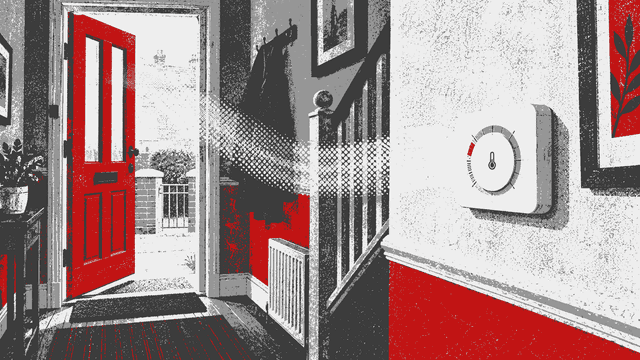
Why does the hall thermostat cool down when the front door opens?
Opening an external door replaces some warm hall air with cooler outside air. If the room thermostat sits in that airflow path, its sensor can register the change before the rest of the home has cooled. A small drop that recovers after the door closes can be an expected local response; a lasting fall, strong draught or prolonged heating demand points to placement, door seals or wider heat-loss issues.
Record the outdoor conditions, how long the door is open, the thermostat reading before and afterwards, and how quickly it recovers. Do not repeatedly leave the door open as a test, cover the thermostat or raise the target sharply. Check only ordinary visible door condition. Keep intended vents clear, and leave thermostat relocation, wiring and boiler settings to competent professionals.
Why the sensor reacts so quickly
A room thermostat measures the air and surfaces around its own position. It is not calculating an average across the whole house. When the front door opens, denser cool air can spread across the floor and mix into the hall while warmer indoor air escapes higher up.
If that moving air passes the thermostat, the sensor can cool faster than internal walls, furniture and rooms farther away. The display may drop even though the home’s stored warmth has barely changed.
Drayton and Resideo installation guidance both say thermostats should be positioned away from draughts. This is why a control near an external door can behave differently from one on a sheltered internal wall.
A brief reading change is not automatically a fault
A small temporary movement after an ordinary entrance or exit may simply show that the sensor noticed real cold air. Once the door closes and the hall air mixes, the reading should move back towards the room condition.
Thermostats vary in how often they sample, round and display temperature. Some may not visibly change during a very short door opening; others show half-degree or finer steps. Do not compare two different products as though they must update identically.
The useful questions are how large the change is, how long recovery takes and whether the heating response makes the home uncomfortable.
Why the heating may run longer afterwards
A thermostat calls for heat when its measured temperature is below the set point. If a door draught cools the sensor, the control may continue or restart heating until the hall reading recovers.
Energy Saving Trust explains that a room thermostat turns heating on until the chosen temperature is reached, then off until the room cools. It follows that a locally cooled hall sensor can temporarily extend demand.
This does not mean turning the target higher will make recovery faster. The boiler and emitters have finite output, and a higher set point simply asks the system to continue for longer.
The front door may expose poor thermostat placement
Many halls are convenient wiring locations, but not every hall position is representative. A thermostat directly opposite the door, beside the frame, behind the door leaf or above a cold air path can be dominated by entrances and exits.
Drayton recommends a free, central position that is not subject to draughts or direct heat. Its guidance also says a single thermostat should represent the part of the home that reaches the required temperature last.
Placement is a professional design judgement. Moving a control into the warmest lounge can create the opposite problem by ending heat while other rooms remain cold.
Door condition changes the size of the effect
A properly closing modern exterior door should limit uncontrolled air leakage when shut. Worn seals, an unlatched door, a large threshold gap, damaged letterbox brushes or poor alignment can keep cold air moving after the person has entered.
Energy Saving Trust distinguishes draughts—uncontrolled gaps—from intentional ventilation. It gives door draught-proofing examples but warns not to block vents needed for safety and air quality.
Look for obvious daylight, a damaged seal or a door that fails to latch. Do not seal an unfamiliar grille, wall vent, airbrick or combustion-air opening.
Weather and use pattern matter
A windy cold evening can push more outside air through the doorway than a mild still afternoon. Carrying shopping, moving a pushchair or waiting for several people can keep the door open longer than a quick exit.
Record these differences. A thermostat drop after a two-minute delivery with the door wide open is not the same as a persistent drop after the door was opened for five seconds.
Also note whether an internal vestibule door was open. A porch or second door can reduce direct exchange only when it is used and closes properly.
A safe observation during ordinary use
- Record the thermostat reading and target before the next normal door use.
- Note the approximate outdoor temperature, wind and rain.
- Record how long the front door is open and whether an inner door is open too.
- Note the reading immediately after closing, then after 10, 20 and 30 minutes.
- Record whether the heating-demand symbol changes.
- Note whether the hall radiator is warm and whether nearby rooms remain comfortable.
- Check that the door latches normally and visible seals are intact.
- Record repeated household use, deliveries or a door left ajar.
Do not create a long open-door test in cold weather. It wastes heat, can chill occupants and tells you less than a record of normal use.
Compare the hall with another sensible location
A separate thermometer can help show whether the effect is local. Place it in free air away from the doorway, radiator, sunlight, console, lamp and kitchen heat. Do not place it on the thermostat or against a cold wall.
Compare trends rather than expecting exact matching. Different sensors have different response times and tolerances. If the hall thermostat recovers quickly while the reference stays steady, a transient door plume is likely.
If the whole home cools rapidly and struggles to recover, insulation, draughts, radiator output, system balance or heating operation may need a wider assessment.
Do not cover the thermostat
A shelf, box, curtain or decorative cover can trap a pocket of air and make the reading less representative. Covering the device to protect it from a draught can slow its response and create a different error.
Keep furniture and coats away from the sensor. Do not aim a portable heater at it or place a hot object nearby to stop heating demand.
If the control is wireless and its manufacturer allows user relocation, move it only to a stable, representative location and preserve reliable communication. Keep a record of the original and new positions.
What if the thermostat is fixed?
Do not unscrew or move a wired thermostat yourself. The circuit may use mains voltage, and relocation can affect zoning, wiring and how the home is controlled.
A heating-controls professional can review whether the existing location is unsuitable and identify a better representative wall. They should consider the hall radiator, TRVs, doors, stairs, sunlight and normal occupancy rather than moving it solely because one reading dipped.
Our completed guide to an open stairwell making a hall thermostat run heating longer explains another hall-specific airflow pattern.
When draught-proofing is appropriate
Repairing worn exterior-door seals or alignment can improve comfort and reduce uncontrolled heat loss. Use components suited to the door, and make sure the door still closes, latches and complies with any fire-safety requirements.
Do not draught-proof internal doors indiscriminately. Energy Saving Trust says gaps under internal doors can be important for airflow through the home. Never block fixed ventilation, extractor provision or air needed by an open-flued or flueless appliance.
If the building is rented, report visible damage and persistent draughts before modifying the door.
When to arrange help
Ask for a controls or heating assessment if the thermostat takes an unusually long time to recover, the heating runs for hours after brief door use, the display is erratic, the control loses connection, rooms overheat or the boiler does not respond correctly.
Have the door inspected if it will not close, its seals are damaged, the threshold leaks water, or the draught continues while it is fully shut. A joiner or door specialist may be appropriate once ventilation requirements are understood.
For boiler faults, unusual combustion warnings or internal gas-appliance work, use a suitably competent Gas Safe registered engineer and keep the casing closed.
If you rent the home
Send the landlord or managing agent the thermostat location, readings, recovery time, door condition, photos and effect on heating. State whether the door locks and latches securely and whether heating remains available.
Do not fit seals, move a supplied thermostat or alter a fire door without permission. Report loss of heating, an insecure external door or risks to vulnerable occupants promptly.
Repair responsibilities and routes differ across the UK; use the relevant tenancy and national guidance.
The practical conclusion
A hall thermostat can cool when the front door opens because outside air reaches the sensor before the rest of the home changes temperature. A small short-lived drop that recovers after closing is often a local response.
Persistent cold airflow, prolonged heating demand or a poorly placed control deserves investigation. Record normal use, keep intended ventilation clear and leave fixed-control relocation and boiler work to competent professionals.
Hall temperature keeps controlling the whole home?
Keep the readings, recovery time and door observations ready for the repair team.