
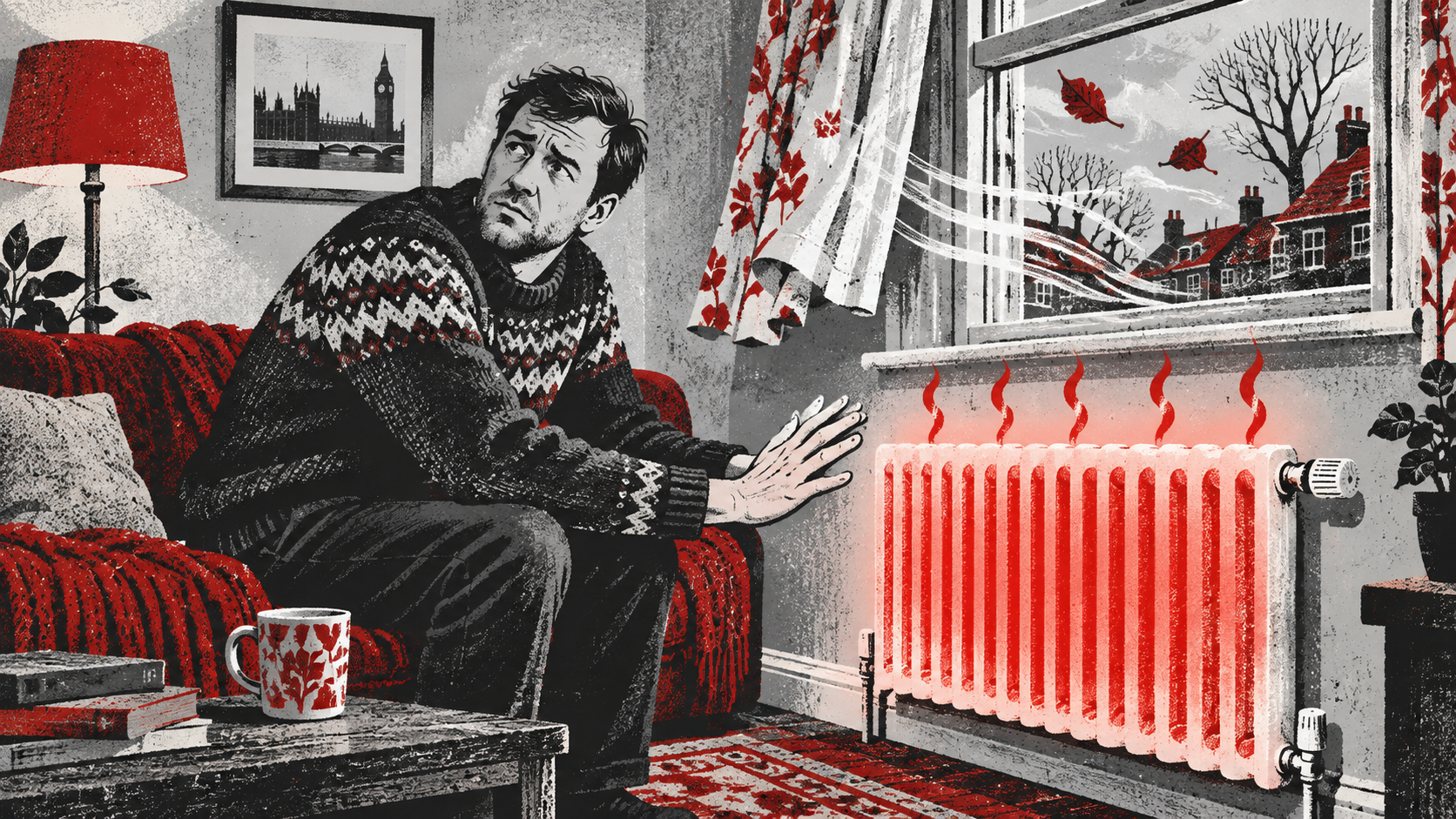
Why is the radiator hot but the room still feels cold?
A radiator can feel properly hot while the room remains uncomfortable. That usually means the radiator is producing heat but the room is losing it quickly, the heat is not circulating well, or the radiator cannot meet the room’s needs in the current weather.
Start by checking the whole room rather than turning the boiler up immediately. Draughts, uncovered windows, large outside walls, blocked airflow, a poorly placed thermostat or an undersized radiator can all make a warm radiator feel ineffective.
The short answer
If the radiator is evenly hot from top to bottom, the usual cold-patch faults are less likely. Check whether furniture or curtains trap the heat, whether cold air is entering around a window or door, and whether the room thermostat is measuring a warmer part of the home. Compare the room with others and note whether the problem is constant or mainly happens in very cold weather.
Do not remove the boiler casing or change hidden valves. If the room never reaches the set temperature, several rooms are affected, or the boiler runs continuously without warming the home, arrange a heating assessment.
A hot radiator is only one part of the picture
A radiator transfers heat into the room, while the walls, windows, roof, floor and ventilation let heat escape. The room warms only when heat enters faster than it leaves. On a mild day, one radiator may be enough. During colder or windier weather, the same radiator can be hot but struggle to keep up.
This does not automatically mean the boiler is faulty. The boiler may be delivering hot water correctly while the room has unusually high heat loss or the heat emitter is too small for the space.
Check whether the radiator is evenly hot
Let the heating run normally, taking care because the radiator may be very hot. Without removing covers or touching pipework, compare the top, middle and bottom from a safe distance. An evenly warm surface points towards room heat loss or heat distribution rather than trapped air or sludge.
If the top stays cold while the bottom is warm, trapped air may be involved. If the bottom remains cold while the top heats, restricted circulation or debris may be more relevant. Those are different symptoms and should not be treated as the same problem.
If only one side heats, record which side and whether the nearby pipe becomes hot. Do not force a stiff valve or remove a thermostatic head unless its instructions clearly describe a safe user action.
Furniture and curtains can trap the heat
A sofa placed directly in front of a radiator absorbs and blocks much of the warm air before it circulates around the room. Long curtains can trap heat between the fabric and the window, particularly when they hang over the radiator.
Move light, freestanding items away if this can be done safely. Do not rest washing on the radiator or push furniture against hot surfaces. Radiator covers can also alter airflow and can make a thermostatic radiator valve sense the wrong temperature.
Energy Saving Trust advises against radiator covers where they interfere with a thermostatic valve’s temperature reading. If a cover is fitted, compare the room with it open or removed only when the product is designed for simple user removal and the radiator is cool.
Look for draughts and cold surfaces
Stand away from the radiator and notice whether cold air is moving around windows, external doors, floorboards, loft hatches or unused chimneys. A room can feel chilly because moving air cools your skin even when the average air temperature is reasonable.
Condensation, very cold window glass and a cold outside wall can add to the sensation. Close curtains after dark without covering the radiator, and use suitable draught proofing on gaps that are not intentional ventilation openings.
Never block air bricks, extractor routes, boiler ventilation or a permanent vent. Ventilation may be necessary for moisture control or appliance safety. If you are unsure why a vent exists, leave it open and ask a competent professional.
Thermostat position can stop the heating too soon
A single room thermostat controls the heating according to the temperature where that thermostat is located. If it is in a warmer hallway, near another heat source or in direct sunlight, it may reach its target while the colder room is still uncomfortable.
Energy Saving Trust explains that a room thermostat switches the heating off when its location reaches the selected temperature. Turning it sharply higher does not make the home warm faster; it simply asks the system to continue for longer.
Note the thermostat location, its reading and the reading from a separate room thermometer if you have one. Domestic thermometers can differ slightly, so look for a consistent pattern rather than treating one number as a diagnosis.
Check the thermostatic radiator valve
A thermostatic radiator valve, or TRV, senses the air around the valve and reduces flow as that area warms. Curtains, furniture or a radiator cover can create a pocket of warm air around it, causing it to close while the rest of the room remains cold.
Make sure the valve is not hidden behind furniture and that its chosen setting suits the room. Higher numbers normally mean a warmer target, not a faster radiator. Do not force a seized control or dismantle the valve body.
Could the radiator be too small?
Radiators are selected according to the room’s likely heat loss. Room size matters, but so do ceiling height, insulation, glazing, exposed walls and the temperatures at which the heating system operates. A loft conversion, extension, removed internal wall or larger window can change what the room needs.
A radiator that was adequate with a higher boiler flow temperature may feel less effective after heating settings or the system design change. Energy Saving Trust notes that radiators may not get hot enough to warm a home properly if the flow temperature is set too low, especially in cold weather.
Do not raise boiler temperatures beyond the manufacturer’s instructions. Ask a heating professional to check the system settings and calculate the room’s heat loss before recommending a larger radiator.
When several rooms feel cold
If many radiators are hot but the whole property remains cold, consider the thermostat setting, heating schedule, insulation and outdoor conditions. If radiators are only lukewarm, the boiler flow temperature, system controls, circulation or boiler operation may need checking.
Record whether the boiler runs continuously, cycles on and off, or reaches its displayed temperature quickly. Also note whether hot water works normally. These observations help an engineer distinguish a room problem from a wider heating-system issue.
For tenants and landlords
A tenant should report the affected room, the radiator temperature pattern, thermostat setting, draughts, condensation and how long the heating has been running. Photographs showing furniture position and windows can help without requiring any dismantling.
A landlord should avoid assuming that a hot radiator proves the room has adequate heating. Consider the heating system, controls, building fabric and the needs of the occupants together. Persistent excess cold can be a housing hazard and should be assessed promptly.
When to arrange professional help
Arrange help when the room cannot reach a comfortable temperature, the boiler runs for long periods without improvement, radiator heat is uneven, controls behave unexpectedly, or the problem appeared after building or heating work.
Use a competent heating engineer for boiler, circulation and control problems. A heating designer or suitably experienced installer can calculate room heat loss and radiator output. Keep all boiler and fixed electrical covers closed.
Common questions
Should I turn the boiler temperature up?
Not automatically. Check the boiler instructions and the rest of the system first. A higher setting may waste energy or create hotter surfaces without solving draughts, thermostat position or an undersized radiator.
Will bleeding help if the radiator is already hot?
Bleeding is intended for trapped air, usually associated with a cold area at the top. An evenly hot radiator is unlikely to benefit from repeated bleeding.
Why does the room feel colder at night?
Outdoor temperatures fall, windows become colder and curtains or furniture may trap radiator heat. Wind can also make draughts more noticeable.
Can a radiator cover cause this?
Yes. A cover can restrict airflow and affect the nearby TRV reading. It may not be the only cause, but it is worth considering.
Related guides: Radiators cold at the bottom, Radiator cold at the top and Radiators cooling before the room is warm.
Room still cold with a hot radiator?
Get the heating system and controls properly checked.