
Worcester Bosch boiler makes a rattling noise when starting
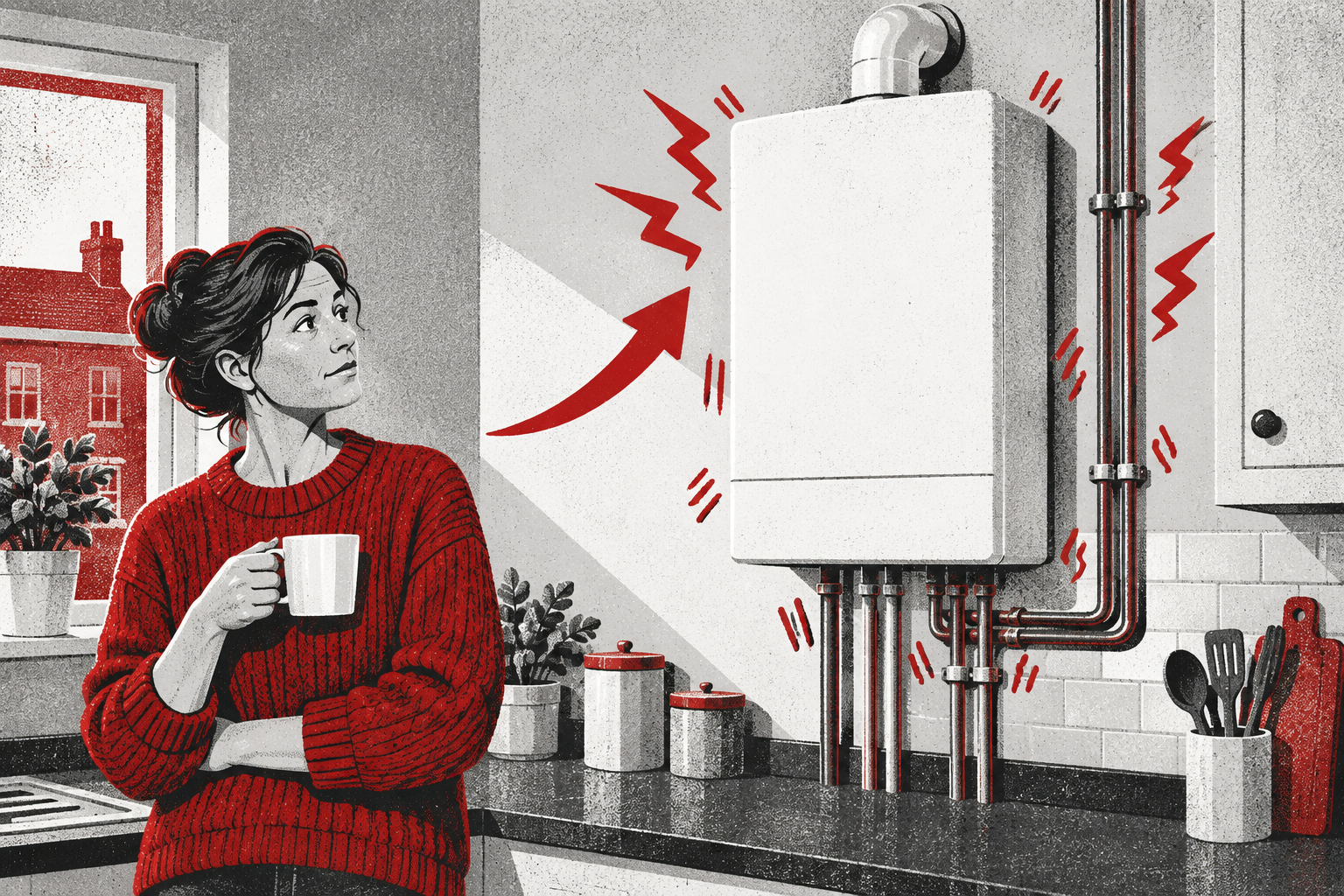
A rattle as a Worcester Bosch boiler starts can come from the casing area, nearby pipes, a pump or fan beginning to move, or condensate struggling to drain. Sound alone cannot identify the part. The timing, duration and exact location are the useful clues.
Keep your hands off the appliance while it starts. Record one natural cycle from a safe distance and do not remove panels, hold pipes or repeatedly create demand.
Pinpoint the moment
Note whether the rattle begins as soon as the thermostat calls, when the fan starts, when the flame symbol appears, when water begins circulating or after the burner has been running. Also note whether it stops once operation settles.
Worcester professional documentation shows that a start sequence can involve fan, pump, valve and ignition activity. Their timing varies by model, so a start-up sound is not automatically an ignition fault.
Where is it loudest?
Listen without touching. Is the sound strongest at the closed casing, the flue area, pipes beneath the boiler, a nearby cupboard, radiator or condensate pipe? Rigid pipework can carry sound into another room.
A short video from two safe positions can help an engineer. Do not press the casing to silence it; doing so changes the evidence and may be unsafe.
Check for visible external vibration
Look for a loose decorative cupboard panel, stored object, visible pipe clip or nearby item vibrating in sympathy. Move only unrelated household objects when the boiler is off and cool.
Do not tighten boiler fixings, flue supports or gas and water pipework yourself. Even an apparently simple panel or clip may form part of the appliance installation.
Is it really a rattle?
Describe the sound plainly: metallic rattle, rapid tapping, low vibration, gurgle, bang or whistle. Worcester says a gurgling sound during attempted start can indicate a blocked condensate pipe, often with repeated lockout or an EA code.
A sharp bang at ignition, scraping motor sound or heavy vibration needs more urgent attention than a faint pipe tick as metal warms.
Cold weather and condensate
If the sound appears during freezing weather, inspect only the accessible external plastic condensate route. Ice, a kink, standing water or gurgling followed by lockout are useful clues.
Worcester’s homeowner guidance permits gentle thawing of safely accessible ground-level pipe with warm—not boiling—water, a hot-water bottle or heat pad. Never use a flame, climb or open the internal trap.
Watch the display
Photograph the full display before resetting. Record every symbol, letter and number and the complete model name. Worcester ranges do not all use the same codes.
Note whether the boiler establishes a steady flame, retries, locks out or simply completes its start. A rattle with normal operation and no code is still worth reporting if it is new or worsening.
Compare heating and hot water
On a combi, note whether the rattle occurs for central heating, hot water or both. If it happens only as radiators begin warming, circulation and pipe movement may be relevant. If it occurs on every burner start, shared start-up components need assessment.
Use one ordinary demand in each mode only if convenient. Do not cycle taps or thermostats repeatedly.
Pressure and circulation clues
Read system pressure when cool and compare it with the exact user guide. Note whether radiators have cold areas, the displayed temperature climbs unusually fast, or water movement sounds continue after start-up.
Do not bleed radiators, refill the system or add treatment solely because of a rattle. These actions can introduce new variables.
Fan and pump sounds need professional separation
Worcester documentation confirms that fan and pump are independently operated during service checks. A worn motor, contact with another component or vibration transmitted through mountings can sound similar from outside.
Those areas are behind the casing and require competent diagnosis. Do not infer that the fan or pump is faulty just because the noise begins before the flame.
Pipe expansion and water movement
Pipes can tick or move slightly as temperature changes, especially where they pass tightly through timber or cupboards. A brief external pipe noise that fades may be different from a persistent internal mechanical rattle.
Tell the engineer whether the sound follows recent pipework, radiator or kitchen-cupboard work. Do not wedge the boiler or pipes to stop movement.
Look for leaks without touching
Worcester advises prompt attention to leaking boilers and lists unusual sounds among possible signs that water is not flowing as intended. Look for staining, drips or damp below the appliance and at visible joints.
If water is near electrics, do not touch the appliance. Turn it off only if this can be done safely and arrange urgent help.
Possible professional diagnostic areas
A Gas Safe registered engineer may check the start sequence, fan and pump, valves, combustion, casing and internal fixings, flue route, condensate drainage, system pressure and water circulation.
No single rattle proves a loose panel, fan, pump, valve or heat exchanger fault. Measurements and the correct Worcester manual are required.
What not to do
- Do not remove or press the casing.
- Do not hold pipes while the boiler starts.
- Do not tighten appliance or flue fixings.
- Do not open the condensate trap.
- Do not keep resetting a lockout.
- Do not ignore a bang, gas smell or worsening vibration.
When to stop using the boiler
Stop and arrange urgent help if the rattle becomes a bang, the appliance shakes, the burner repeatedly fails, smoke or scorching appears, water reaches electrics, or you smell gas.
HSE says a suspected unsafe gas appliance must not be used until checked. For a gas smell, avoid electrical switches and flames, open doors and windows, leave if needed and call 0800 111 999.
Carbon monoxide safety
If a carbon monoxide alarm sounds or anyone has headache, dizziness, nausea, weakness, confusion, chest pain or breathing difficulty, go outside and seek medical advice. Call 999 for severe symptoms.
What to tell the engineer
- the full Worcester model and code;
- the exact point in the start sequence;
- where the sound is loudest;
- whether heating, hot water or both trigger it;
- how long it lasts and whether operation settles;
- the cool pressure and any circulation symptoms; and
- recent weather or building work.
Frequently asked questions
Is a slight start-up rattle normal?
A brief change in sound can occur as components start, but a new metallic rattle, worsening vibration or noise with lockout needs assessment.
Could it be a frozen condensate pipe?
Worcester links blocked condensate with gurgling and lockout rather than every rattle. Cold weather and the display help separate the clues.
Can I tighten the casing?
No. The casing is part of the appliance and should remain correctly fitted. Ask a Gas Safe engineer to inspect it.
Why does it stop after a few seconds?
A fan, pump or pipe may settle once speed and flow stabilise, but that timing alone does not identify the cause.
Compare a cold start with a warm restart
Without forcing extra cycles, note whether the rattle is strongest on the first start of the day or returns every time the burner starts. Materials, pipes and mountings may behave differently when cold, while a mechanical component can produce a repeatable sound at every start.
Record how long the boiler had been idle and whether outdoor temperature was unusually low. Do not switch the boiler off overnight solely to create a cold test.
Check the surrounding room
Boiler vibration can make a cupboard door, shelf, utensil, loose cover panel or nearby object rattle. With the boiler off and cool, remove only unrelated loose household items. Do not modify a purpose-built boiler cupboard, ventilation opening or any appliance clearance.
If the noise remains after obvious loose objects are removed, leave the rest for the engineer. A sound transmitted into cabinetry may still originate inside the appliance or connected pipework.
Keep the recording useful
Film from a stable position with the complete front of the boiler and display visible, then move to the nearest pipe or cupboard only after the cycle ends. State whether the recording is a heating or hot-water start. Avoid touching the appliance to demonstrate the sound.
A ten-second clear recording is usually more useful than several long clips. Preserve the original audio rather than filtering it, because the rhythm and change in pitch can help distinguish vibration, water movement and ignition noise.
Advice for rented properties
Tenants should report when the noise began, how often it occurs and any code, leak or safety alarm. Landlords and agents should arrange an appropriate Gas Safe registered engineer rather than asking the tenant to remove panels or tighten fittings.
If the engineer isolates the appliance or labels it unsafe, it must remain unused until the defect is remedied. Keep the attendance and repair details with the property’s gas-safety records.
Related boiler help
Has the start-up rattle become louder or more frequent?
Arrange a professional check before vibration develops into a shutdown or leak.