
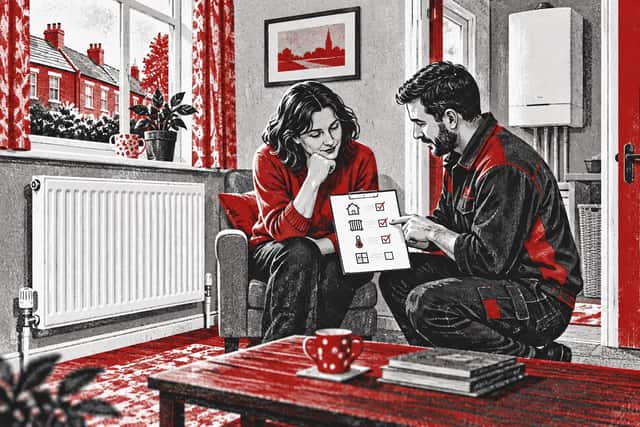
Can an electric boiler work with existing radiators?
Yes—an electric flow boiler can often use an existing wet radiator circuit because it heats circulating water rather than replacing every radiator with an electric panel. Reuse is not automatic, though. The installer must check heat loss, boiler output, radiator capacity, pipe condition, water quality, pump flow, controls, expansion and electrical supply.
If your radiators are connected by water pipes to a central boiler, they may be reusable with a suitable electric flow boiler. Ask for a room-by-room heat-loss calculation, radiator-output check and system survey. Do not assume an electric panel heater and an electric boiler are the same thing: one heats a room directly, while the other normally serves a wet central-heating system.
First identify what kind of radiators you have
A conventional wet radiator contains water heated by a central heat source. Flow and return pipes connect it to the rest of the circuit. An electric panel radiator, storage heater or oil-filled electric radiator is a separate electrical appliance and is not connected to a wet boiler.
An electric flow boiler is intended for the first arrangement. Heatrae Sadia states that its Amptec electric flow boiler works with standard radiators, circulating pumps, programmers, room thermostats and thermostatic radiator valves.
Look for visible water pipes and an existing central boiler, but let the installer confirm the system layout. Hidden pipework, shared circuits and old disconnected equipment can make a quick visual assumption unreliable.
Why existing wet radiators can be compatible
The radiators do not care whether the water was heated by gas, oil or electric resistance. They release heat according to water temperature, flow rate, radiator size and room conditions. If the new boiler can supply the system’s required water temperature and heat output, the basic emitter principle remains the same.
Energy Saving Trust describes boilers as heating water that is sent to radiators or underfloor pipes—the wet central-heating system. Its electric-heating guidance notes that electric boilers, unlike direct panel heaters, do use a wet distribution system.
Compatibility therefore depends on the whole circuit, not just the radiator material or age.
The heat-loss calculation comes first
Each room loses heat through walls, windows, roof, floor and ventilation. The installer should calculate how much heat each room needs in cold design weather and compare that with the output of its radiator at the proposed flow and return temperatures.
If the electric boiler is set to a similar water temperature as the previous boiler, existing radiators may deliver similar heat. If the design uses a lower temperature, their output falls and some may need to be larger. If the calculated boiler output is lower than the building’s heat loss, changing controls will not create the missing capacity.
Do not size the new electric boiler solely from the old boiler badge. Older gas boilers may have been oversized or may also have served domestic hot water.
Check the boiler’s permitted temperature range
Electric boilers vary. The Amptec guide, for example, distinguishes a standard radiator series with a higher output-temperature control range from models intended for underfloor heating with a lower range. This is model-specific information, not a setting to copy.
The installer should match the selected model to the radiator design and controls. Running water hotter can raise radiator surface temperature and distribution losses; running it too cool can leave rooms below target.
Homeowners should use only the user controls described in the manual. Internal temperature limits, electrical stages and commissioning settings belong to the installer.
Existing pipework and water quality matter
A replacement heat source should not be connected blindly to a dirty or restricted circuit. Sludge, magnetite, scale, blocked valves and undersized pipes can reduce flow and make some radiators slow or cold.
The Amptec instructions require the heating system to be flushed and treated in line with the applicable system-water standard. Energy Saving Trust also notes that corrosion, scale and sludge reduce the effectiveness of boilers and radiators and that inhibitor should be refreshed when a system is drained for boiler replacement.
The installer should assess water condition and choose a cleaning method appropriate to the system. An aggressive flush is not automatically right for fragile old pipework, and homeowners should not add unknown chemicals themselves.
The pump must provide enough flow
An electric flow boiler contains only a small water volume and relies on adequate circulation. Manufacturer instructions specify minimum flow, pump control and a safe route for water during pump overrun.
Existing systems may have a pump inside the old boiler, a separate external pump or zone pumps. Removing the original boiler can therefore remove a component the circuit depended on. The new design must include a compatible pump and controls rather than assuming the old pipework will circulate by itself.
Low flow can cause poor heating or safety shutdowns. Do not change pump speed, force valves or open a boiler to troubleshoot it.
Radiator valves and bypass arrangements
Thermostatic radiator valves can continue to control individual rooms when compatible with the design. The main room thermostat and programmer create the overall demand. Energy Saving Trust recommends a programmer, room thermostat and TRVs as core controls for a central-heating system.
If many TRVs close, the boiler and pump may still need a guaranteed flow path. The Amptec guide requires an open route or a correctly designed automatic bypass arrangement. This must be specified and commissioned by the installer.
Do not leave one radiator permanently hot or remove a valve head based on generic advice. The correct bypass and thermostat-room arrangement depends on the selected boiler and circuit.
Sealed and open-vented systems
Some electric flow boilers can work with sealed or open-vented heating systems. The Amptec range is one example, but each model has specific expansion, pressure-relief, head and component requirements.
An old open-vented circuit with a small feed-and-expansion tank is not automatically unsuitable. A sealed conversion is also not automatically necessary. The installer should inspect the pipe condition, expansion arrangement, height, pressure and manufacturer instructions.
Never cap an open vent, remove safety components or convert the system as a DIY job. Those parts protect the circuit as water heats and expands.
Will the radiators become electric radiators?
No. They remain water-filled radiators. Electricity is used centrally at the boiler to heat the circulating water. The radiators themselves normally have no heating element or mains connection.
This matters when comparing quotations. A direct-electric radiator installation removes or bypasses the wet system and gives each room its own electrical heater. An electric boiler retains the central pipe circuit, pump and water-based controls.
The two options can have different installation, control, peak-load and maintenance implications. Ask the installer to name the proposed system clearly.
What about domestic hot water?
A heating-only electric flow boiler serves radiators but does not automatically provide tap hot water. Heatrae Sadia’s product information describes domestic hot water being provided with an indirect cylinder or a separate direct cylinder for its Amptec range.
If the old gas boiler was a combi, changing to a heating-only electric boiler may require a cylinder or another hot-water solution. That affects space, plumbing and electrical demand. A product marketed as an electric combi may work differently and must be assessed by its own manual.
Make sure the quotation describes both room heating and hot water. Reusing radiators solves only the space-heating distribution question.
Electrical capacity can limit boiler output
Even where every radiator is physically reusable, the property needs enough electrical capacity for the chosen boiler and its other loads. A low-output model selected only to fit the existing supply may not meet the calculated heat loss.
The heating designer and electrician should coordinate before equipment is ordered. A new high-current circuit, consumer-unit work, service upgrade or three-phase supply may be needed depending on model and whole-house load.
Related guidance: our plain-English guide to electric boilers.
Signs some radiators or pipes need attention
- Radiators remain cold at the bottom or need frequent bleeding.
- Valves leak, seize or no longer control room temperature.
- Pipework is visibly corroded or has a history of leaks.
- Some rooms never warmed adequately with the old system.
- The system makes persistent rushing, knocking or pumping noises.
- Microbore branches or long zones struggle to circulate.
- Recent extensions added emitters without rebalancing.
- Water drained from the system is heavily contaminated.
These observations do not decide whether the whole system must be replaced. They tell the surveyor where closer inspection, cleaning, repair, resizing or balancing may be needed.
What a proper conversion survey should include
- Room-by-room heat-loss calculations.
- Existing radiator dimensions, types and estimated outputs.
- Proposed flow and return temperatures.
- Pipe sizes, layout, zones and likely flow resistance.
- Pump, bypass, expansion and pressure-relief arrangements.
- System-water condition and an appropriate cleaning plan.
- Programmer, room thermostat and radiator controls.
- Domestic hot-water provision.
- Electrical supply and maximum simultaneous demand.
- Building-control, electrical and heating certification.
The survey should identify which parts are retained, altered or replaced. “Use existing radiators” is too vague if it does not also confirm performance.
Can the old radiators be too small?
Yes. A radiator that was already marginal may remain marginal. Lower design water temperatures, a colder extension or changed insulation can also alter the required size.
Sometimes a double-panel radiator can provide more output in a similar wall area, but the pipework and room layout still need checking. Adding radiator area increases the system’s water volume and flow requirements, which must remain within the boiler and pump design.
Do not assess output by touching the radiator. Surface temperature shows only part of the story; room heat loss and measured water conditions matter.
Building Regulations and paperwork
GOV.UK guidance for England lists installation or replacement of a heating system or boiler, and in some circumstances adding radiators, as work covered by Building Regulations routes. A registered competent person may be able to self-certify applicable work.
Rules and certification routes vary across the UK. Ask in writing who handles building control, electrical certification, system commissioning and any network application.
Keep the heat-loss calculation, radiator schedule, wiring certificate, compliance certificate, commissioning sheet and product manuals together. They will help with future servicing or fault diagnosis.
Running-cost context
Reusing radiators can reduce disruption, but it does not make direct electric heat cheap to run. Energy Saving Trust says standard-rate electricity is generally more expensive than gas or oil, so running costs can be high even though an electric boiler avoids combustion and a flue.
Ask for an annual energy estimate based on the property’s heat demand, not a percentage-efficiency claim alone. Compare suitable alternatives, tariffs and fabric improvements before committing.
No boiler can compensate efficiently for major uncontrolled heat loss. Insulation and draught reduction may lower the required output and improve comfort, provided ventilation remains appropriate.
The practical conclusion
An electric boiler can often work with existing wet radiators, controls and pipework. The deciding questions are whether the emitters meet each room’s heat loss, the circuit can provide the required flow, the components are sound and the electrical supply can support the selected boiler.
Get a coordinated heating and electrical survey before buying equipment. Reuse serviceable parts where the calculations support them, repair or resize only what needs changing, and leave boiler wiring, hydraulic safety and commissioning to competent installers.
Checking an electric-boiler system?
Have the radiators, circulation, controls and electrical supply assessed together.