
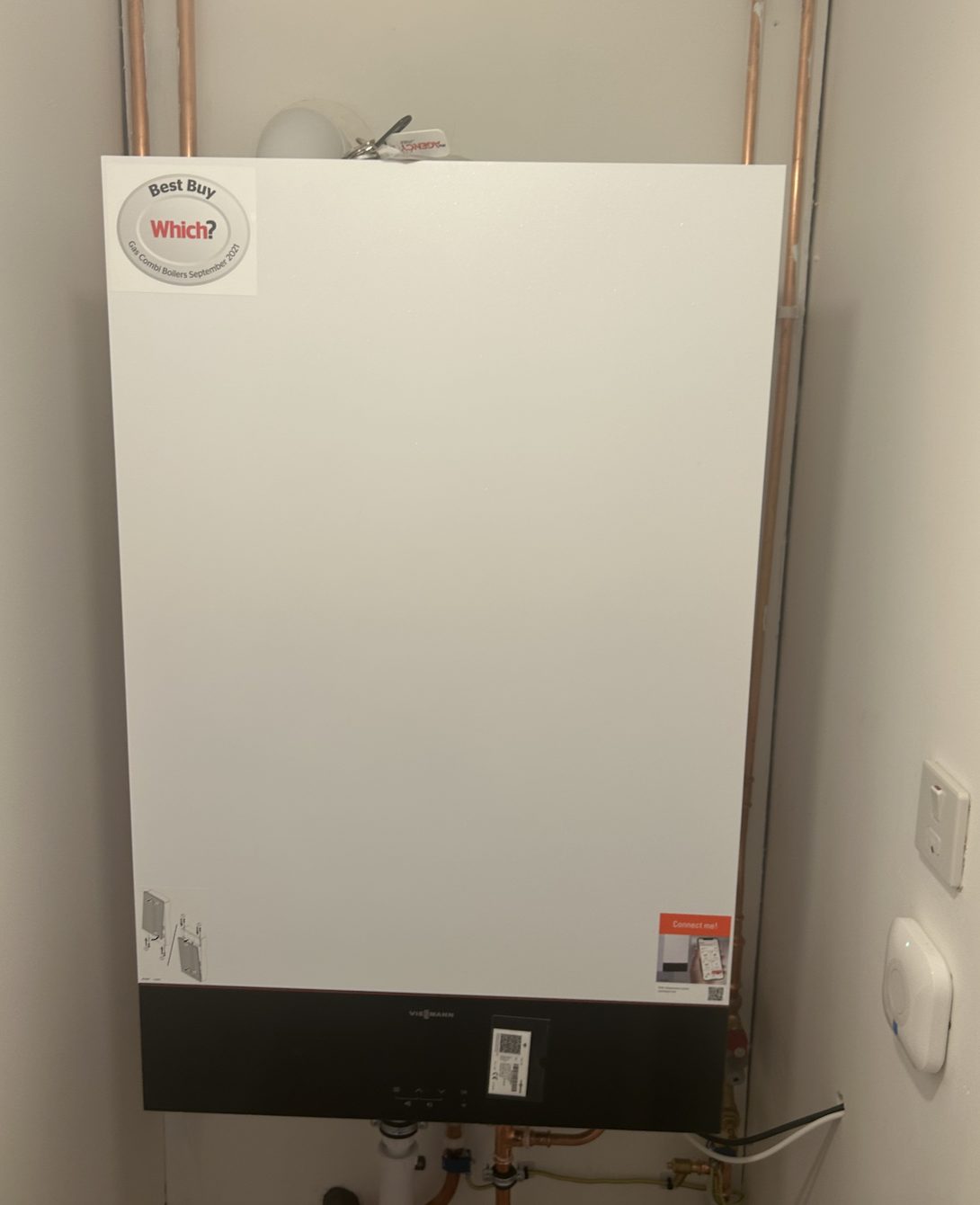
If the radiators heat normally but the taps stay cold, the good news is that the boiler can still produce heat. The fault is likely to be limited to the hot-water side of the system, its controls or the way hot water is being delivered. The right checks depend first on whether you have a combi boiler or a hot-water cylinder.
First: identify your type of heating system
A combination, or combi, boiler heats mains water when you open a hot tap. It normally has no separate hot-water cylinder. A system or regular boiler usually heats water stored in a cylinder, often in an airing cupboard. That distinction changes what “heating works but no hot water” is likely to mean.
With a combi, the boiler must detect a tap demand and transfer heat to the water immediately. With a cylinder system, the boiler may be heating the radiators correctly while the cylinder’s timer, thermostat, zone valve or immersion heater is not doing what you expect.
Check whether every hot tap is affected
Try more than one hot tap. If only one tap or shower is affected, the boiler may not be the problem. A local tap cartridge, mixer valve, shower control or blocked outlet can prevent correct hot-water delivery. If every hot outlet is cold or lukewarm, a boiler or system control issue becomes more likely.
Also compare the flow. If cold water flows strongly but the hot side is unusually weak, record that difference for the engineer. Do not dismantle a tap, shower or boiler based only on this symptom.
Safe checks for any boiler
- Check that the boiler display has power and record any exact fault code.
- Confirm the water supply is working at cold taps.
- Check whether other gas appliances are operating, without repeatedly trying to ignite anything.
- Look at the boiler pressure when the system is cool and compare it with the model’s user manual.
- Check for visible leaks around the boiler, cylinder and accessible pipework.
- Use only reset or user controls described in the boiler manual.
A fault code is a starting point, not proof that a named component needs replacing. Codes differ by manufacturer and model. Never use a meaning copied from a different boiler, and do not keep resetting an appliance that locks out again.
If you have a combi boiler
Worcester Bosch explains that a combi provides heating and hot water within one appliance, heating tap water directly from the mains as it is requested. When radiators work but hot water does not, the boiler is responding to heating demand but may not be recognising or serving the tap demand correctly.
Watch the display while a hot tap runs
Open one hot tap at a normal flow and observe the display without removing any cover. Some boilers show a tap symbol, flame symbol or temperature change when they detect demand. Note what happens; do not use this observation to attempt an internal repair.
If the display shows no response, the appliance may not be detecting sufficient water flow or a hot-water demand. If it responds and fires but the water remains cold or cycles hot and cold, a different control, sensor, heat-transfer or flow issue may be involved. Those are engineer diagnoses.
Check that the flow is not extremely low
Combi boilers require adequate mains flow. Worcester Bosch notes that mains-fed hot-water performance depends on both pressure and flow, and that other outlets can reduce the available supply. Test one tap on its own. If the problem occurs only when several outlets run, demand may be exceeding what the boiler and incoming main can deliver.
Eco or preheat is not normally “hot water off”
On boilers with an Eco or preheat setting, Eco mode may make hot water take a little longer to arrive because the boiler is not keeping itself warm between demands. It should not leave every tap permanently cold. Use the model’s manual before changing modes.
The diverter valve may be suspected—but it is not a DIY repair
A combi uses an internal mechanism to direct heat towards either the radiators or domestic hot water. Vaillant identifies the diverter valve as one possible cause when one service works and the other does not. A similar symptom can arise from other components, so it needs testing rather than automatic replacement. Do not remove the boiler casing or try to free, clean or replace an internal valve yourself.
If you have a hot-water cylinder
The heating and stored hot water may be controlled on separate channels. Radiators can therefore work while the cylinder receives no request for heat.
Check the hot-water programme
Look for a controller with separate Heating and Hot Water settings. Confirm that the hot-water channel is on and that the clock is correct. Power cuts and seasonal clock changes can alter schedules. A combi normally heats tap water on demand, so a stored-hot-water programme does not apply in the same way.
Allow time for the cylinder to reheat
If stored hot water has been used up, switching the hot-water channel on will not make a full cylinder hot instantly. Allow the normal recovery period stated by the manufacturer or installer. If the pipe into the cylinder becomes hot but the stored water does not, tell the engineer; do not remove covers or alter wiring.
Check the cylinder thermostat without changing unfamiliar settings
A visible cylinder thermostat tells the system when stored water needs heating. Check that it has not been knocked to an obviously low setting, but use the manufacturer or installer guidance before adjusting it. Water stored too cool can present hygiene risks, while excessively hot water can scald.
Use an immersion heater only as designed
Some cylinders have an electric immersion heater that can provide temporary hot water independently of the boiler. Only use its ordinary switch or timer if you know the control and it is operating normally. Do not remove the immersion cover, touch wiring or repeatedly reset an electrical trip. A failed immersion heater requires an electrician or other suitably competent professional.
What boiler pressure tells you
Very low or high system pressure can stop some boilers operating properly, but pressure is less likely to explain a neat split where central heating continues normally and only hot water has failed. Check the displayed value against the exact boiler manual rather than assuming one number suits every appliance.
If the manual provides a clear household procedure for topping up, follow it exactly. Filling loops and controls differ. If pressure falls again, there is a leak, or you cannot identify the correct control, stop and arrange an engineer.
What not to do
- Do not remove the boiler casing.
- Do not test or replace internal sensors, valves, pumps or circuit boards.
- Do not bridge electrical controls or bypass a safety device.
- Do not repeatedly reset a recurring lockout.
- Do not order a diverter valve simply because an online list names it.
- Do not work on gas pipework or combustion components.
Gas Safe Register’s consumer guidance is clear that gas appliances are not DIY territory. Work on a gas boiler must be carried out by an engineer who is Gas Safe registered and qualified for that type of work.
Information that helps the engineer diagnose it
- the boiler make, model and exact displayed code;
- whether you have a combi or cylinder;
- whether every hot outlet is affected;
- whether the water is completely cold, lukewarm or alternating hot and cold;
- whether the boiler display changes when a tap opens;
- the pressure reading when cool;
- when the fault began and whether any power cut or plumbing work preceded it; and
- any leaks, unusual noises or smells.
This evidence shortens the route to a real diagnosis. It is more useful than declaring that a particular part has failed.
When the problem is urgent
Turn the appliance off using its normal user control and seek prompt help if water is leaking from the boiler, water is near electrics, the appliance is repeatedly locking out or there are signs of overheating.
If you smell gas, do not operate electrical switches or use a flame. Leave the property as directed and call the National Gas Emergency Service on 0800 111 999 from a safe place. If a carbon monoxide alarm sounds or anyone has possible carbon monoxide symptoms, get into fresh air, seek urgent medical help and do not use the appliance until it has been checked.
Advice for landlords and tenants
Tenants should report the loss of hot water promptly and include the observations above. Do not open the boiler or arrange invasive work without the landlord or agent’s agreement, except through the property’s emergency procedure.
Landlords should respond reasonably, especially where the household has no alternative hot-water supply. Use a properly qualified engineer and keep records of the report, attendance and repair. A working central-heating circuit does not mean the hot-water fault can simply be ignored.
Frequently asked questions
Why does my heating work but the shower is cold?
If other hot taps work, investigate the shower control rather than assuming the boiler has failed. If every hot outlet is cold, follow the boiler or cylinder checks above.
Can a boiler provide heating with a faulty diverter valve?
Yes, a diverter-related fault is one possible explanation on a combi, but it is not the only one. An engineer must test the appliance before deciding what needs repair.
Should I reset the boiler?
Only if the exact model’s user instructions recommend it for the displayed condition. One correct reset may clear a temporary interruption. Repeated lockout means the cause needs investigation.
Why is the water only lukewarm?
Excessive tap flow, a mixer problem, scale or restricted heat transfer, a sensor or control issue can all affect temperature. Check whether all outlets behave alike and whether reducing one tap’s flow changes the result, then arrange diagnosis if it persists.
Does working heating prove the gas supply is fine?
It shows that the appliance has recently produced space heat, but it does not prove every hot-water component is working or rule out an intermittent supply or safety issue.
Useful next guides
- Why hot water keeps going hot and cold
- What should boiler pressure be?
- Boiler running but radiators not heating
- What happens during a boiler repair visit?