
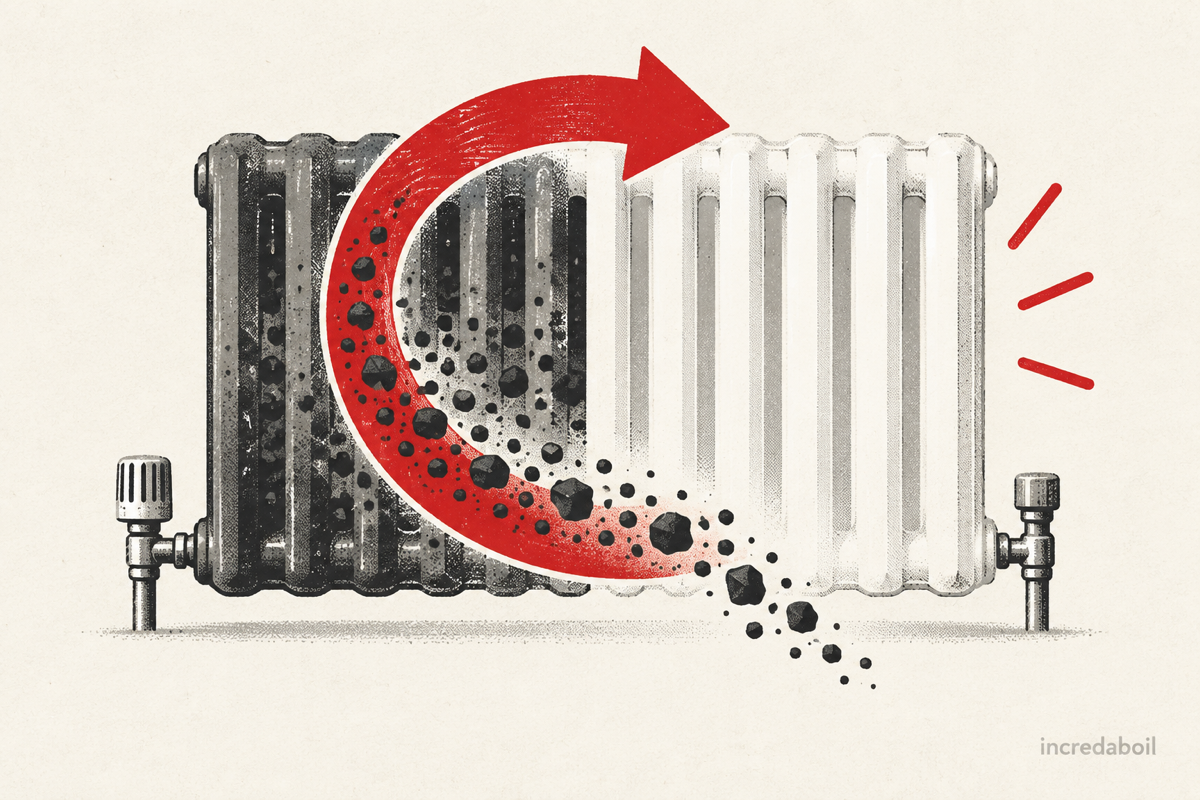
A powerflush is a professional method of cleaning a wet central-heating system. An engineer connects a specialist flushing machine to the heating circuit and circulates water, usually with a compatible cleaning chemical, at a high flow rate. The aim is to loosen and remove sludge, corrosion products, scale and other debris from radiators, pipework and heat exchangers.
It is not a repair for every heating fault and it is not simply “turning the pressure up”. A suitable powerflush uses controlled flow and a process chosen for the condition of the system. Before recommending one, an engineer should establish that contamination is genuinely contributing to poor circulation, cold areas, noise or repeat blockages.
What problem is a powerflush intended to solve?
Steel radiators and other ferrous parts can corrode over time. The resulting particles circulate in the system water and may settle in radiators, valves, narrow pipework and boiler waterways. Black magnetic material is commonly called magnetite or central-heating sludge. Red iron oxide, limescale and installation debris may also be present.
As deposits accumulate, they can restrict the movement of water and reduce heat transfer. Fernox says untreated debris can build up in radiators, pipework and heat exchangers, while Worcester Bosch identifies cold radiator spots and excessive boiler noise as signs that a system may need cleaning. Baxi also lists radiators that are hot at the top but cold at the bottom, hot pipes feeding cool radiators and a large temperature difference between boiler flow and return as possible sludge clues.
Those clues justify investigation; they do not prove that powerflushing is the only suitable treatment. Air, closed valves, failed pumps, poor balancing and control faults can produce similar complaints.
How does a professional powerflush work?
The engineer first inspects the heating system, notes existing leaks or weak components and confirms the route by which the flushing equipment can be connected. Floors and nearby surfaces should be protected. The boiler and controls are managed in accordance with the appliance and chemical instructions.
The flushing machine creates a strong, controlled movement of water through the circuit. Cleaner is circulated as appropriate, and flow can be directed through different parts of the system. Radiators may be worked through individually and agitated externally to help loosen material that has settled at the bottom. Reversing the direction of flow can help dislodge stubborn deposits.
Dirty water and loosened debris are then removed. The system is rinsed as required until the engineer is satisfied with the water condition, refilled correctly and protected with a compatible corrosion inhibitor. The heating is recommissioned, vented and checked for leaks, pressure, circulation and even heat distribution.
Powerflushing involves electrical equipment, chemicals, hot system water and components that may already be fragile. It should be carried out by someone competent to assess the whole heating system, with any work on a gas boiler left to a suitably qualified Gas Safe registered engineer.
Does a powerflush use high pressure?
The useful distinction is between flow rate and system pressure. A flushing machine is designed to move a substantial volume of water through the heating circuit so it can carry debris away. It should operate under controlled conditions suitable for the system; the objective is not to expose radiators and pipework to excessive pressure.
An engineer still needs to consider the condition of old radiators, valves, joints and hidden pipework. Deposits can sometimes partly mask existing corrosion, so a weak component may begin to leak when contamination is removed. That is an existing condition revealed by cleaning, not a reason to treat every old system as identical.
What are the main signs of a dirty heating system?
- Several radiators are hot at the top but cold across the bottom.
- Radiators warm slowly or do not reach an even temperature.
- Radiator pipes become hot while the radiator itself remains much cooler.
- A magnetic filter repeatedly collects a heavy amount of black debris.
- System-water samples remain dark or contain visible particles.
- The boiler, pump or pipework is noisy and other causes have been checked.
- Small waterways, valves or components repeatedly restrict or block.
- Flow from the boiler is hot but return circulation remains unexpectedly cool.
A single cold radiator is often a local issue. A radiator cold at the top commonly contains trapped air. A radiator cold all over may have a closed thermostatic valve, stuck valve pin, closed lockshield, airlock or branch restriction. The pattern across the house matters more than one symptom.
What should be checked before a powerflush?
A competent diagnosis should cover the boiler’s displayed status, system pressure, heating demand, pump operation, motorised or diverter valves, radiator valves, balancing and the temperature pattern around the circuit. The engineer may inspect a fitted magnetic filter and test a system-water sample. They should also ask about leaks, frequent topping-up, recent component changes and previous cleaning.
These checks separate water-quality problems from faults that cleaning cannot fix. A thermostat that is not calling for heat, a failed zone valve, a seized pump or an incorrectly balanced circuit needs its own remedy. Powerflushing a clean system will not repair an electrical control or a broken mechanical component.
Is powerflushing the only way to clean central heating?
No. Fernox’s summary of BS 7593 identifies powerflushing, mains-pressure cleaning and gravity cleaning as recognised approaches. The right method depends on the system design, the amount and type of contamination, available circulation and the condition of the components.
A chemical cleaner followed by a thorough controlled flush may be appropriate where circulation remains reasonable and contamination is lighter. A heavily restricted system may need the greater flow and targeted work of a powerflush. One badly blocked radiator or pipe branch may require removal, separate cleaning or replacement. Cleaning should be selected from evidence, not used as a standard response to every cold room.
How long does a powerflush take?
Worcester Bosch gives an indicative range of six to ten hours, depending on the number of radiators, the age of the system and the severity of the debris. That is a useful guide, not a fixed duration for every home. System layout, access, water condition, component problems and the number of individual circuits all affect the job.
A quotation should explain the scope rather than promise an unusually short universal time. Ask which radiators and circuits are included, what tests will be made at the end and how additional faults will be handled if the clean reveals them.
What are the likely benefits?
When sludge is the cause of the problem, a successful clean can restore circulation, reduce cold-bottom areas and help radiators transfer heat more evenly. Removing debris also reduces the amount available to lodge in pumps, valves and boiler waterways. A quieter, more evenly heated system may operate for shorter periods to reach the desired room temperature.
The result depends on how dirty the system was, whether the radiators are correctly sized and balanced, the building’s heat loss, and whether another fault is present. A clean system cannot compensate for poor insulation, an undersized radiator or controls set incorrectly.
What can a powerflush not fix?
- A room thermostat, programmer or receiver that is not creating a heating demand.
- A failed pump, zone valve, diverter valve, sensor or other component.
- A leaking or badly corroded radiator that has lost sound metal.
- Pipework that is too small, incorrectly routed or badly designed.
- A radiator that is undersized for the room.
- Heat loss caused by draughts or inadequate insulation.
- A boiler combustion or gas-safety fault.
Cleaning and repair may both be needed, but they are different pieces of work.
Can powerflushing cause leaks?
A properly planned powerflush is intended to use controlled flow. However, an old system may already contain thin radiator panels, weak joints, corroded valves or pinholed pipework. Sludge can sometimes sit over those weaknesses. Removing it may reveal a leak that was already developing.
The engineer should inspect visible components, discuss obvious risks and stop if the system responds badly. Active leaks or severely fragile sections may need repair or replacement before intensive cleaning. Ask what precautions will be taken and how any newly exposed defect would be handled.
What should happen after the flush?
Removing debris is only part of the job. The system should be refilled and commissioned correctly, with a compatible inhibitor at the appropriate concentration. Air should be vented, pressure checked and radiators balanced where necessary. A magnetic system filter can capture circulating ferrous material and should be maintained in line with its instructions.
The cause of contamination matters too. Persistent pressure loss, regular top-ups, oxygen entering an open-vented system or incorrect chemical treatment can allow corrosion to resume. Repairing leaks and testing system water later are more useful than assuming one clean permanently removes every future risk.
Questions to ask the engineer
- What evidence shows that sludge is affecting my system?
- Which alternative causes have been checked?
- Why is powerflushing preferable to another cleaning method here?
- Are any radiators, valves or pipes visibly vulnerable?
- Which cleaner and inhibitor will be used?
- Will each radiator and heating circuit be worked through?
- How will water condition and circulation be checked afterwards?
- Are balancing and filter cleaning included?
- Which repairs, if discovered, would be separate?
Common powerflush questions
Do new boilers always need a powerflush?
An existing heating circuit should be assessed and cleaned appropriately when a boiler is replaced, but the chosen method should match its condition and the new appliance manufacturer’s instructions. “Appropriate cleaning” does not mean the same process is automatically required in every property.
Can I stay at home while it is done?
Usually, but discuss access, noise, temporary loss of heating and water, pets, floor protection and any vulnerable occupants with the engineer before work starts.
Will I need new radiators afterwards?
Not simply because the system was flushed. A radiator may need replacement if it is leaking, badly corroded or remains internally blocked despite suitable cleaning. The engineer should show the evidence for replacement.
Is a magnetic filter the same as a powerflush?
No. A filter captures circulating magnetic debris over time. A powerflush is an active cleaning process intended to remove existing contamination from the wider system. A filter cannot by itself clear every deposit already settled in radiators.
Related boiler-help guides
- Why are my radiators cold at the bottom?
- Radiator not working? Work out what the cold patch means
- How to balance radiators
- Boiler is running but radiators are not heating: what now?
Is sludge affecting your boiler or heating?
If your boiler is noisy, overheating or failing to circulate because of system contamination, book a fixed-price diagnosis and repair in Leeds.