
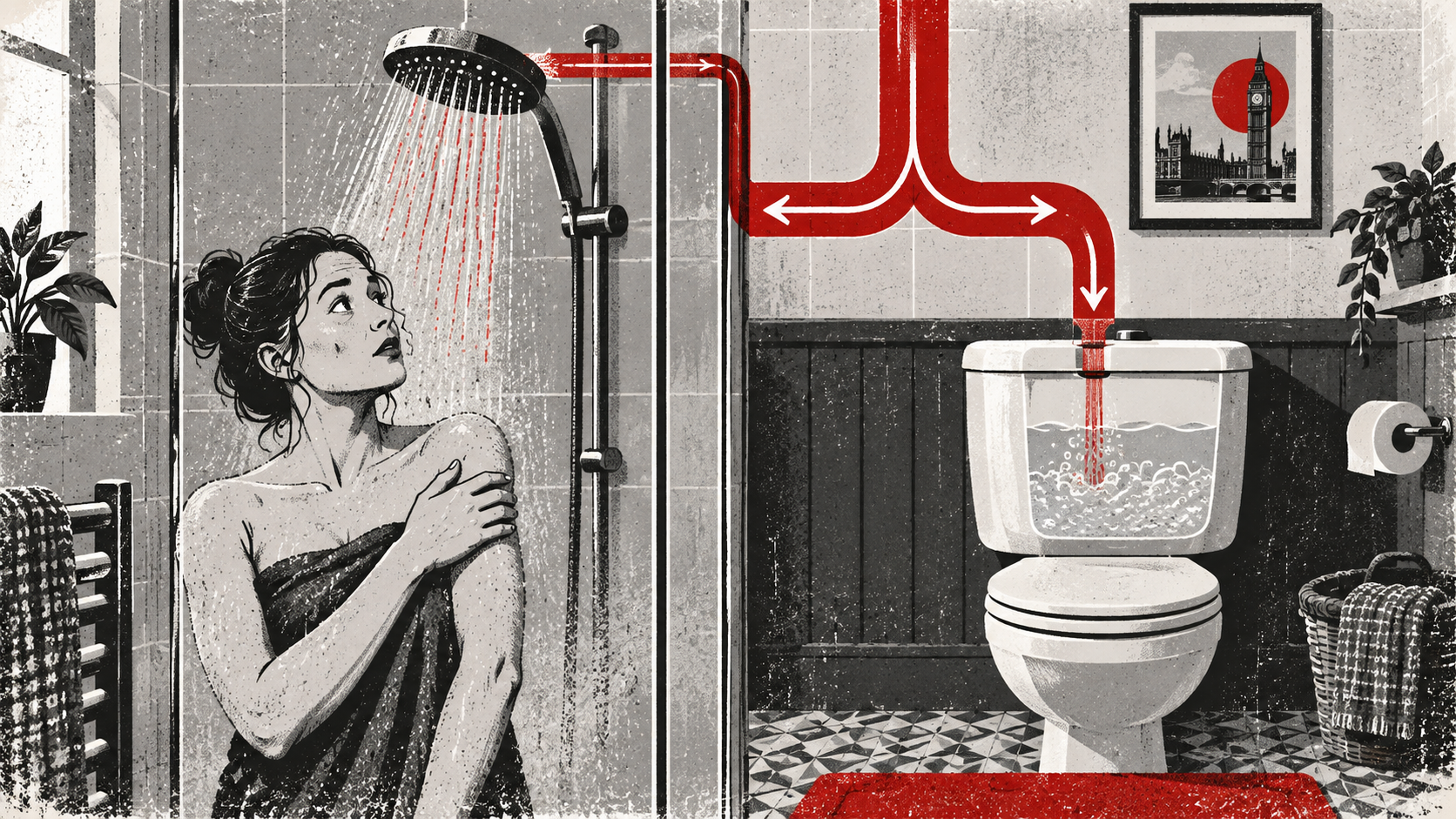
Why does a shower cool when a toilet is flushed?
Flushing a toilet starts its cistern refilling with cold water. If the shower and toilet share a restricted mains supply or internal pipe route, that extra demand can reduce the flow or pressure reaching the shower. The shower then changes temperature while it tries to maintain the selected mix.
This is often a water-supply or shower-control issue rather than a boiler fault. The type of shower and hot-water system decide what the temperature does.
The short answer
Two outlets are asking for water at once. A toilet cistern can take a noticeable share of the cold supply for a short period. If cold flow to a mixer shower falls, the shower may become warmer; if a combi boiler receives less mains flow or an electric shower detects low pressure, the water may become cooler or the unit may reduce heating.
A thermostatic shower is designed to limit temperature changes, but it still needs hot and cold supplies within its stated pressure and flow range. It cannot create water that the property supply is not delivering.
Why the shower can become cooler
With a combi boiler, hot water starts as incoming mains water. The boiler heats that flow on demand. A toilet refilling from the same supply can reduce the amount available or change the pressure balance, so the boiler and shower valve both respond.
An electric shower also depends on a minimum cold-water flow and pressure. If another outlet takes too much, some models reduce power or flow for safety. Follow the exact user instructions and do not open the shower unit.
Why some showers become hotter instead
A conventional mixer combines separate hot and cold supplies. If the toilet mainly reduces the cold side, the mix can briefly become hotter. A thermostatic cartridge should compensate within its design limits and may reduce flow or shut down if a safe balance cannot be maintained.
That difference is a useful clue. Report whether the shower goes colder, hotter or simply weaker rather than calling every change a boiler problem.
Identify the shower and hot-water system
- Electric shower: heats mains cold water inside the shower unit.
- Combi-fed mixer: mixes boiler-heated mains water with cold mains water.
- Cylinder-fed mixer: may use stored hot water and a gravity or pumped arrangement.
- Thermostatic mixer: automatically adjusts the hot-cold mix, but still requires suitable supplies.
Do not identify the system by appearance alone. Check the manual, handover information or ask a plumber.
A safe comparison
Run the shower at its normal comfortable setting. Ask another person to flush the toilet once while you note:
- whether the shower temperature rises or falls;
- whether the spray becomes weaker;
- how long the change lasts while the cistern refills;
- whether the boiler display changes or shows a fault;
- whether the same thing happens when a cold tap or washing machine uses water;
- whether every shower in the home behaves the same way.
Stop the test if the water becomes uncomfortably hot. Do not repeatedly flush simply to reproduce the fault.
Check the wider cold-water supply
Notice whether the kitchen cold tap is also weak, whether neighbours have low pressure and whether the change is worse at peak times. Water UK advises using the cold kitchen tap and asking a neighbour to help separate an internal plumbing problem from a water-company network issue.
A shared supply pipe can produce lower flow when several homes use water. A partially closed stop valve, undersized pipework or a fault in the property can create a similar symptom. Do not force a stiff valve.
Could the toilet be using more water than expected?
A cistern that refills very slowly or runs continuously keeps drawing water for longer. Listen for water continuing well after the flush and look for a visible trickle into the bowl. Arrange a plumbing repair if the toilet does not stop filling normally.
That can make the shower problem more frequent, but it does not prove the boiler is faulty.
When the boiler may still need checking
Arrange boiler help if every hot outlet goes cool even when no other water is being used, the boiler repeatedly locks out, an exact fault code appears, or hot water alternates strongly under steady single-outlet demand.
If only one shower changes while hot taps remain stable, the shower valve, filter, hose, head or local pipework is more likely. Our guide to a problem affecting only one hot outlet explains this comparison.
A boiler pressure gauge shows the sealed heating circuit, not the mains pressure feeding a toilet. See why the boiler gauge may move during a shower for that separate question.
What not to do
Do not open an electric shower, boiler or thermostatic cartridge. Do not adjust hidden service valves or fit a pump directly to the mains without professional advice and water-regulations checks.
Do not set the shower hotter to compensate. The next change in supply could produce an unsafe temperature.
For tenants and landlords
A tenant can report the shower type, whether it goes hot or cold, the change in spray strength, how long the cistern refills and whether other outlets cause the same effect. They should report any scalding risk promptly.
A landlord or agent should decide whether the correct contractor is a plumber, shower engineer, electrician or Gas Safe engineer. The evidence above helps avoid sending a boiler engineer for a property-supply problem.
The practical conclusion
A toilet flush can cool a shower because the cistern temporarily shares the property’s available water flow. The shower and hot-water system respond according to their design.
Compare temperature and flow, check whether other outlets create the same pattern and arrange the right professional if the change is large, unsafe or new.
Hot water changing whenever another outlet runs?
Record the shower type and flow pattern before arranging a diagnosis.