
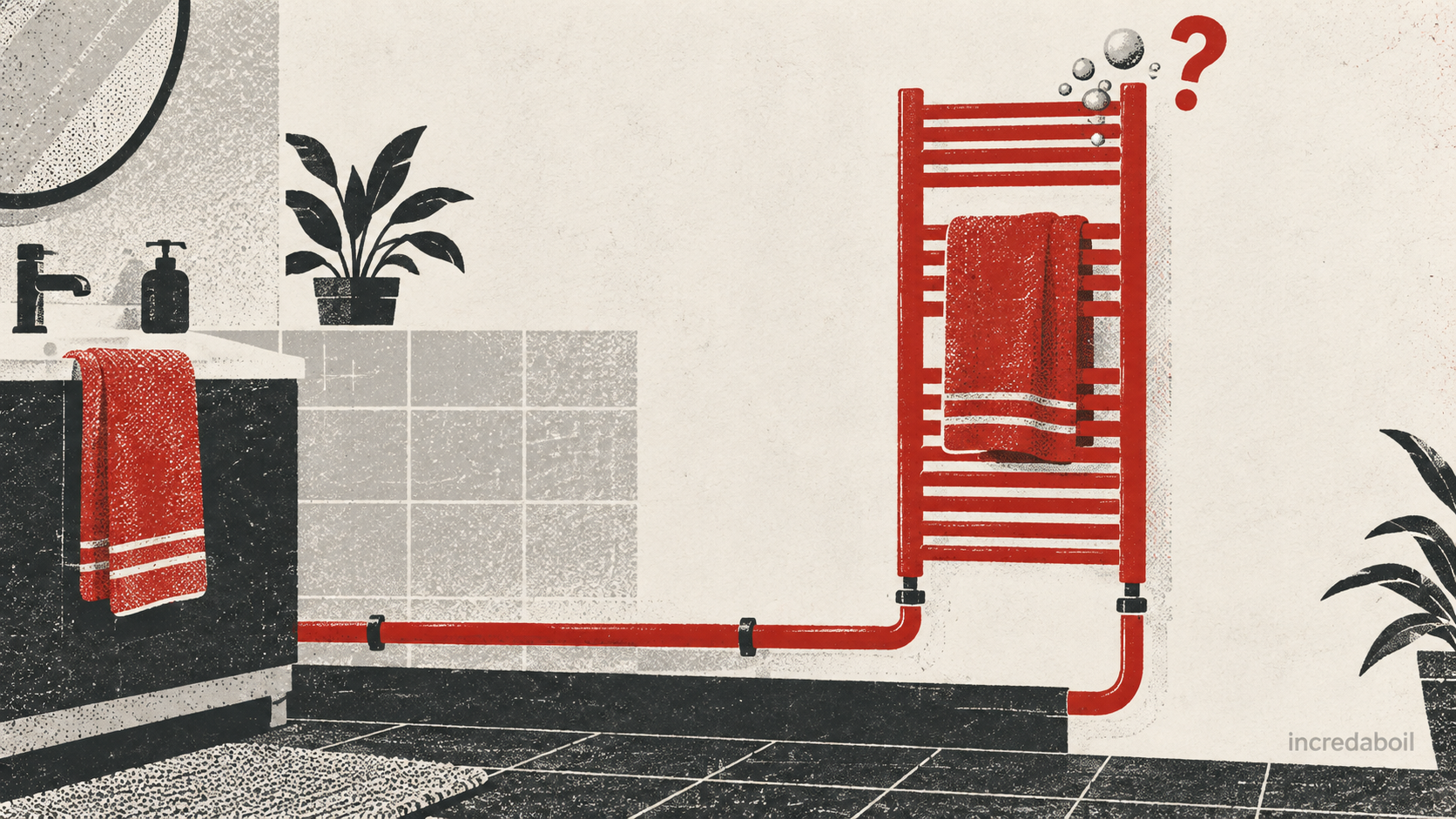
A towel radiator that needs bleeding again and again is not simply “one of those things”. It is often the highest radiator in the house, so any air or gas moving around the heating system naturally collects there first. That explains why the bathroom shows the symptom; it does not explain why the ‘air’ keeps returning.
An occasional small pocket after plumbing work or the first heating run of autumn may be harmless. If the top goes cold every few days, the rail gurgles repeatedly or boiler pressure keeps changing, the system needs investigating rather than endless bleeding.
Why the towel radiator collects air first
Air rises through water. Bathroom towel rails are commonly installed upstairs and may be the highest emitter on the system. Their tall vertical tubes also make a convenient collection point. Baxi’s homeowner guidance specifically notes that air often gathers in the highest radiator, which is frequently a bathroom towel rail.
This is useful evidence. If one high rail becomes cold at the top while lower radiators remain warm, trapped gas is plausible. If the whole rail is cold, both pipes are cold or only one side warms, the cause may instead be a valve, poor flow, balancing problem or blockage.
How to recognise trapped air
- the top bars are cooler than the bottom bars;
- you hear trickling, bubbling or gurgling when the heating starts;
- the rail warms more fully just after it is vented;
- the same symptom gradually returns from the top down; or
- other high radiators develop a similar cold patch.
A cold bottom is a different pattern and can point towards settled magnetite or restricted flow. A rail that stays lukewarm all over may simply receive too little water because the system is unbalanced. Do not use the bleed point as the answer to every cold-radiator fault.
Is it really air?
People normally call any gas in a radiator “air”, but corrosion inside a heating system can also produce gas. Worcester Bosch’s technical guidance explains that repeated venting can be linked to system gassing and corrosion rather than a single trapped pocket.
Never hold a match, lighter or other flame near a bleed valve to identify the gas. Keep ignition sources away, ventilate the room and ask a heating engineer to diagnose persistent gassing. The safe conclusion is not “keep letting it out”; it is “find out why it is being produced or admitted”.
Common reasons the gas keeps returning
1. Air left after filling or plumbing work
Replacing a radiator, draining the circuit or making a pipework alteration introduces fresh water and air. A small amount can move to the highest point over the following heating cycles. One or two careful vents may settle it. Tell the installer if it continues.
2. A small leak somewhere on the heating circuit
A leak can lose system water and make repeated top-ups necessary. Wet marks are not always obvious: a tiny valve seep may evaporate on warm pipework, and concealed pipework may leave staining somewhere else. Check accessible radiator valves, visible joints, ceilings beneath pipe routes and the discharge pipe outside, without removing the boiler case.
If a sealed system loses pressure as the rail fills with gas, record the cold pressure and how quickly it falls. That pattern is more useful to an engineer than repeatedly topping up and bleeding.
3. Fresh water is being added too often
Every refill brings dissolved oxygen into the circuit. Once heated, some gas can come out of solution and corrosion risk can increase if water treatment is inadequate. A correctly operating sealed system should not need routine weekly topping up. If it does, the loss of pressure needs a diagnosis.
4. Corrosion and inadequate inhibitor
Heating system water contains different metals. Without suitable cleaning, inhibitor and commissioning, corrosion can create magnetite and gas. Warning signs can include dark water when a radiator is vented, repeated air, cold bottoms and dirty magnetic-filter contents.
An engineer can test system water and follow current BS 7593 treatment practice. Simply adding an unknown chemical dose is not a reliable cure because the system volume, existing products, cleanliness and cause all matter.
5. An automatic air vent or open-vent arrangement
Systems may have automatic air vents and, on older open-vented layouts, feed-and-expansion pipework. A sticking vent, incorrect pumping arrangement or “pumping over” can keep introducing oxygen. These are system-design and component faults for an engineer, not homeowner adjustments.
6. Pipework that traps a pocket
A towel rail added during a bathroom renovation may have pipe runs that rise and fall, leaving a local high point that does not clear easily. The rail might also sit above the rest of a microbore branch. Good commissioning should remove air and confirm that the pipe route, valves and flow are suitable.
Can I bleed the towel radiator safely?
Bleeding is a normal homeowner task if the manufacturer or installer permits it and the valve is accessible. Worcester Bosch advises switching the heating off and allowing radiators to cool first. This avoids very hot water and stops the pump drawing more gas around the circuit.
- Switch the heating off and let the towel rail cool completely.
- Protect the wall and floor with a cloth and hold a small container beneath the vent.
- Use the correct radiator key or tool and turn the bleed point only a small amount.
- Listen for the hiss. Close the valve as soon as water appears steadily.
- Do not remove the bleed screw, force a seized fitting or overtighten it.
- For a sealed system, check the boiler pressure when everything is cool and follow the boiler’s user instructions if it genuinely needs restoring.
Stop if the bleed valve leaks, spins without closing, sprays dirty water or is inaccessible behind electrical equipment. Electric dual-fuel towel rails need extra care: isolate them according to their instructions and do not let water reach the electrical element or controls.
Why the boiler pressure may change after bleeding
Releasing gas and a little water can reduce the cold pressure on a sealed system. That is why pressure should be checked afterwards. The correct range is model-specific; use the boiler’s user manual rather than a number copied from another appliance.
Pressure that repeatedly falls after venting may reflect a leak or expansion-vessel problem. Pressure that rises sharply when hot and then falls when cool can also point to an expansion issue. Do not remove the boiler casing or attempt to recharge internal components.
What to record before booking an engineer
- how often the rail needs venting;
- whether its top, bottom or whole surface is cold;
- the boiler pressure when fully cold and when hot;
- whether other upstairs radiators gurgle;
- recent radiator, bathroom or boiler work;
- visible drips, staining or green/white deposits at valves; and
- the colour of any water released.
A short dated log is better than venting on autopilot. It helps separate a one-off commissioning pocket from a recurring leak, corrosion or circulation fault.
Note whether the problem is worse after a boiler refill or after work elsewhere in the house. Timing can reveal a useful connection.
When repeated bleeding needs professional attention
Arrange a heating-system inspection if air returns within days or weeks, more than one radiator is affected, pressure drops, you need repeated filling, water is very dark, a valve leaks or the system was recently altered. Ask the engineer to investigate the source of the gas and check water quality, not just bleed the rail.
If work involves the gas boiler, use a Gas Safe registered engineer competent for that appliance. Gas Safe Register states that removing a room-sealed boiler case can form part of work on the gas appliance; it is not a homeowner diagnostic step.
Frequently asked questions
Why is only my bathroom towel rail full of air?
It is often the highest radiator, so gas gathers there first. The rail is showing where the gas ends up, not necessarily where it entered the system.
How often should a towel radiator need bleeding?
There is no fixed schedule. A small release after filling or maintenance can be normal. Regular recurrence is evidence of another issue and should not be treated as maintenance.
Can a towel radiator create air?
The rail itself is usually a collection point. Corrosion within it or elsewhere can contribute to system gassing, but diagnosis requires checking the whole circuit and its water treatment.
Should I leave the bleed valve slightly open?
No. It must be closed after venting. Leaving it open will leak water or admit air as pressures change.
Will balancing stop the air?
Balancing can improve flow but does not cure a leak, corrosion or an air-ingress fault. It may help move a trapped pocket after proper filling, yet recurring gas still needs a cause.
Related boiler-help guides
- Radiator cold at the top
- Boiler pressure drops when heating is off
- How to balance radiators
- What is magnetite?
Does your towel radiator keep filling with air?
Book a fixed-price Incredaboil repair for an eligible Baxi, Worcester Bosch or Ideal boiler and have the recurring pressure or circulation problem diagnosed properly.